
South Carolina now requires kratom product labels to list how much 7-OH is inside. That number is useful, but it does not tell you everything. Here is what the label rule covers, what it leaves out, and how to use what you read to stay safer or to get help.
What the law requires
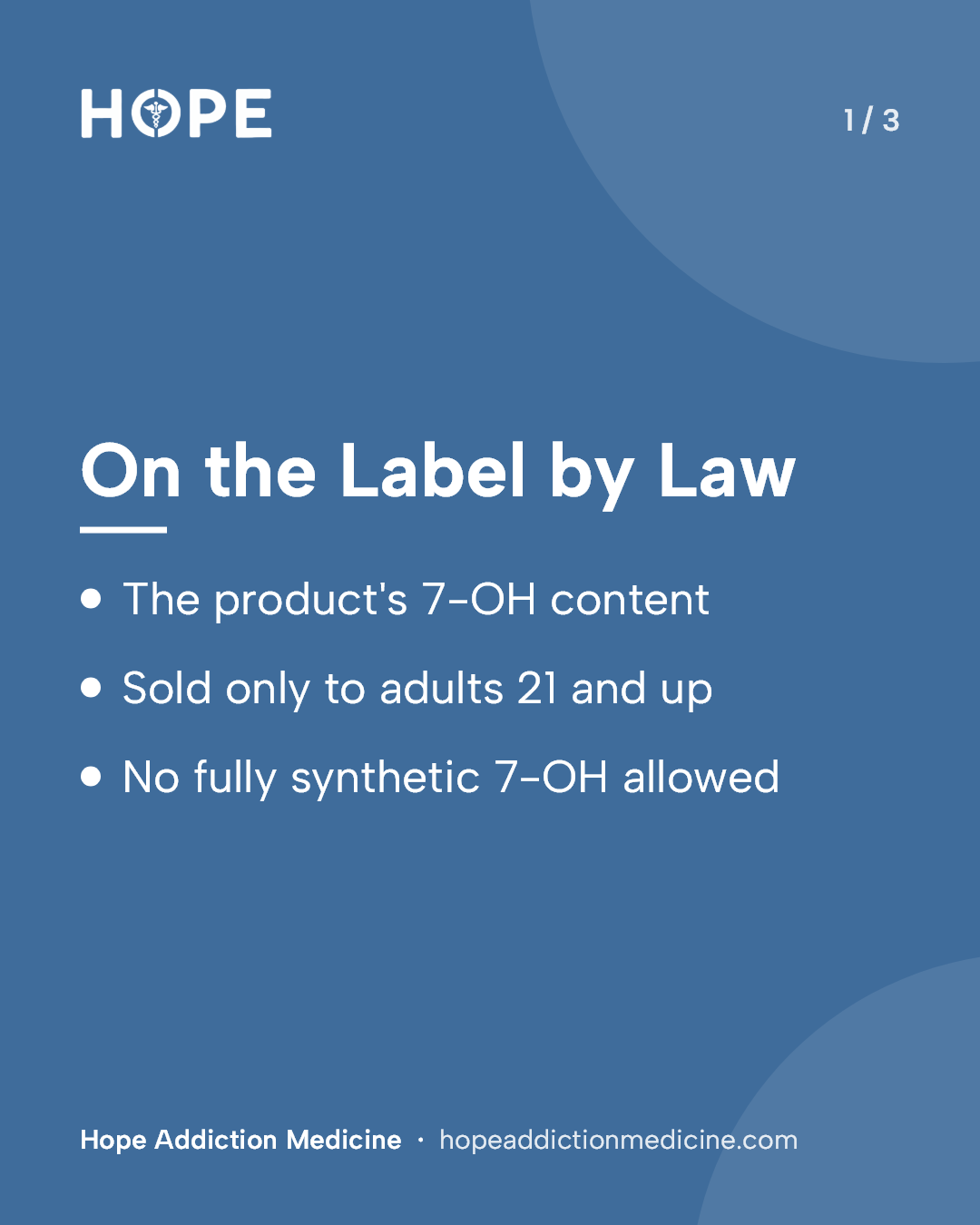
South Carolina's Kratom Consumer Protection Act, Act 35:
- Bans selling kratom products to anyone under 21
- Bans products that contain fully synthetic 7-OH
- Requires each label to list the product's 7-OH content
What the label does not tell you
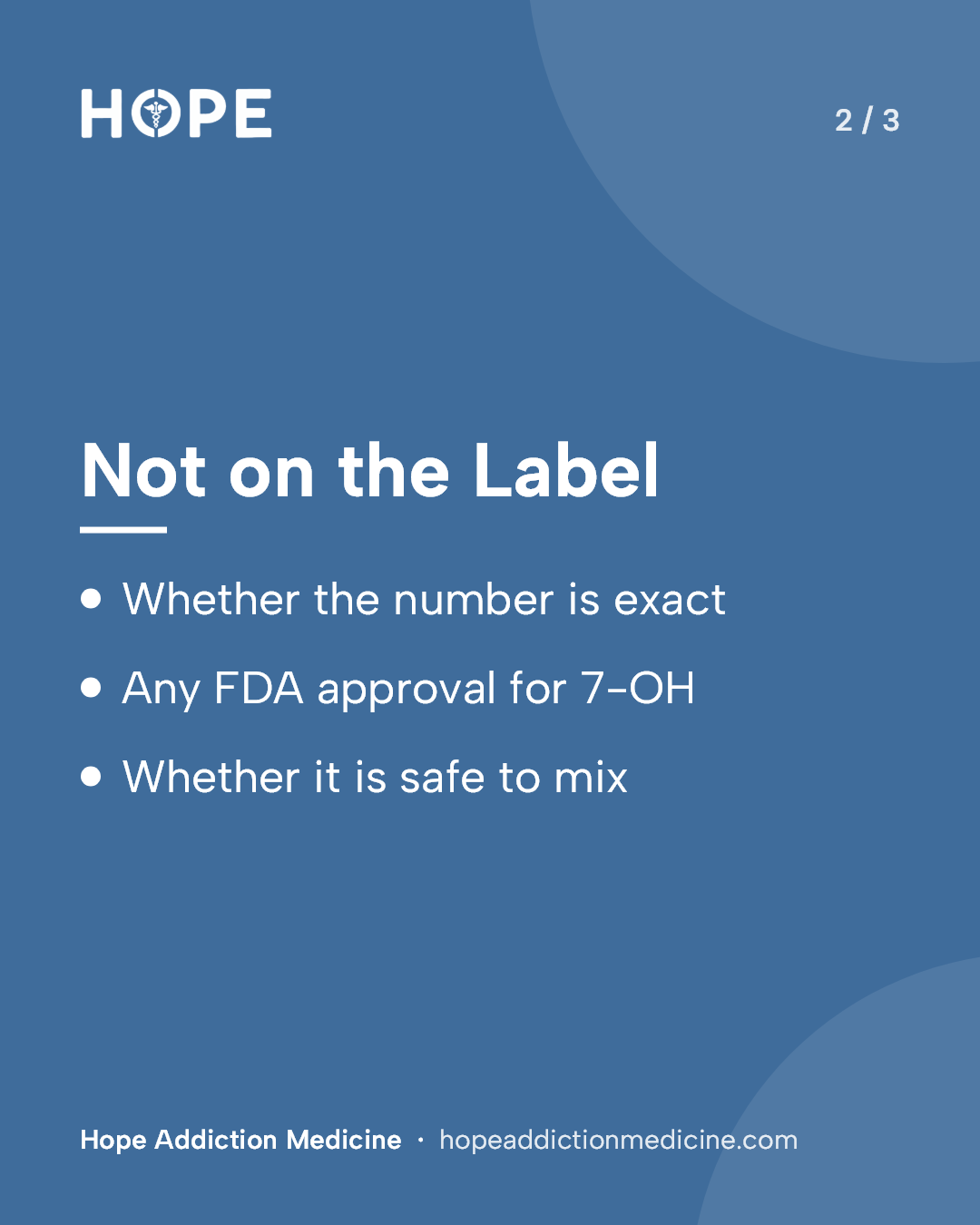
- That a strong product is illegal. Act 35 sets no percentage cap on 7-OH. A 2% cap appeared in drafts and in bill H.4030, but it was never enacted, so a highly concentrated product can still be sold to adults.
- That the number is exact. Product strength varies, and a label is only as reliable as the company behind it. Kratom products are not regulated like medicines.
- That the product is approved. The FDA says there are no FDA-approved 7-OH drugs, that 7-OH is not lawful in dietary supplements and that it cannot lawfully be added to foods.
- That it is safe to mix. Taking kratom or 7-OH with alcohol, benzodiazepines, other sedatives or opioids raises the risk of dangerous side effects.
How to use the label
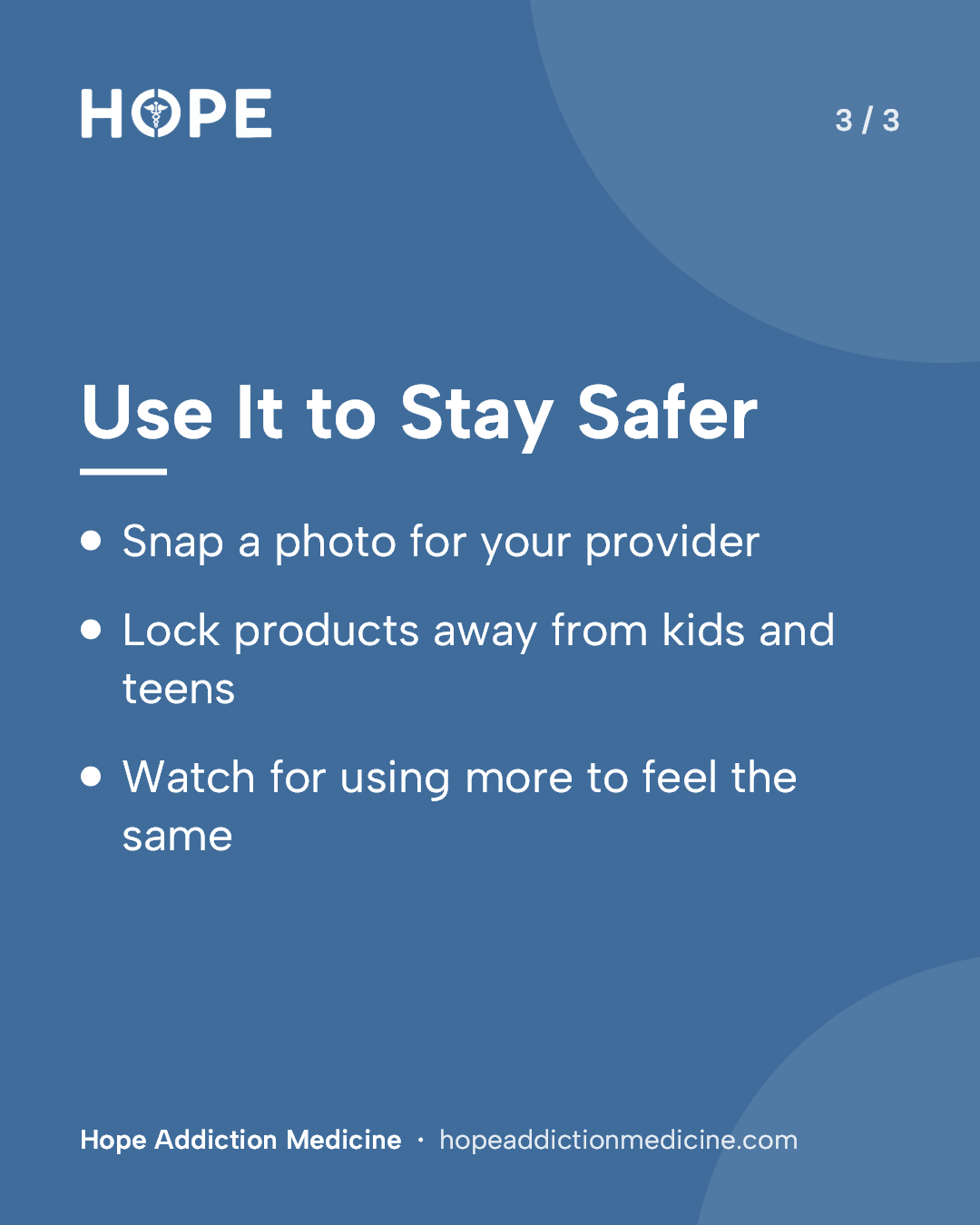
- Keep the package or take a photo of the label. If you see a provider, the 7-OH content helps them understand what you have been taking.
- Store any kratom or 7-OH product locked up and out of reach of children and teens.
- Notice if you are buying stronger products or using more to feel the same. Dose escalation is a common sign of dependence.
If someone has a bad reaction
The FDA says to call the Poison Help Line at 1-800-222-1222 if you think someone has had a bad reaction to a 7-OH product, and to call 911 for a life-threatening emergency. Bring the package to the hospital if you can. If someone may be overdosing (they will not wake up, their breathing is slow or stopped, or their lips are blue), call 911 and give naloxone (Narcan) if you have it. Naloxone is sold without a prescription. If you are thinking about suicide, call or text 988.
Ready to Start Treatment?
Confidential, evidence-based care in West Ashley. Call to ask about the next available new-patient appointment.
5 cards. Swipe or tap to see the next one.
When the label is not the problem
If you have tried to cut back and could not, the issue is not which product you choose. NIDA says studies suggest people may have mild to moderate withdrawal when they stop regular kratom use, and daily use of concentrated 7-OH can bring withdrawal that feels like opioid withdrawal. Treatment starts with an honest medical evaluation, and options include a gradual taper or, for significant dependence, buprenorphine when it fits.
For some people, cognitive behavioral therapy (CBT) helps them spot the moments that lead them back to the shelf. Ask us when you call whether we can offer it, and we will point you to a referral when a dedicated program is the better match.
Read how kratom and 7-OH differ, or learn about kratom and 7-OH treatment in West Ashley.
Sources: NIDA, Kratom; FDA, Hiding in Plain Sight: 7-OH Products; FDA, Products Containing 7-OH Can Cause Serious Harm; FDA, FDA Takes Steps to Restrict 7-OH Opioid Products; South Carolina General Assembly, S.221, South Carolina Kratom Consumer Protection Act.
Help at Hope Addiction Medicine
Our team combines medication with counseling and behavioral therapies, through hybrid in-person and virtual care from our West Ashley office in Charleston, with urine drug screens at a local lab and periodic vitals checks close to home. Call to ask about the next available new-patient appointment. Request an appointment or call our office.
This article is general information, not medical advice, and does not create a patient–provider relationship. Every situation is different, so see a provider who can evaluate yours and develop a plan of care. Any medication discussed here may not be right for you: the right choice depends on your diagnoses, other health conditions and current medicines, so take medication only as directed by the provider managing your care. If you are ever in doubt about an emergency, call 911 or go to the nearest emergency room. If someone may be overdosing, call 911 and give naloxone if you have it.
Frequently Asked Questions
Yes. Act 35 requires labels to list each product's 7-OH content. It also bans sales to anyone under 21 and bans fully synthetic 7-OH.
No. Act 35 sets no percentage cap. A 2% cap appeared in drafts and in bill H.4030, but it was never enacted.
It is a starting point, not a promise. Product strength varies, kratom products are not regulated like medicines, and a label is only as reliable as the company behind it.
If you see a provider or need emergency care, the label's 7-OH content helps the care team understand what was taken. Call the Poison Help Line at 1-800-222-1222 for a bad reaction, or 911 for an emergency.