Leaf or Concentrate? What to Tell Your Provider
Based on FDA, Hiding in Plain Sight: 7-OH Products
5 cards. Swipe or tap to see the next one.
How the kratom leaf and concentrated 7-OH products differ, what the FDA and NIDA say, what South Carolina's Act 35 covers and how treatment can help you stop.
Ready to Start Treatment?
Confidential, evidence-based care in West Ashley. Call to ask about the next available new-patient appointment.
In this guide
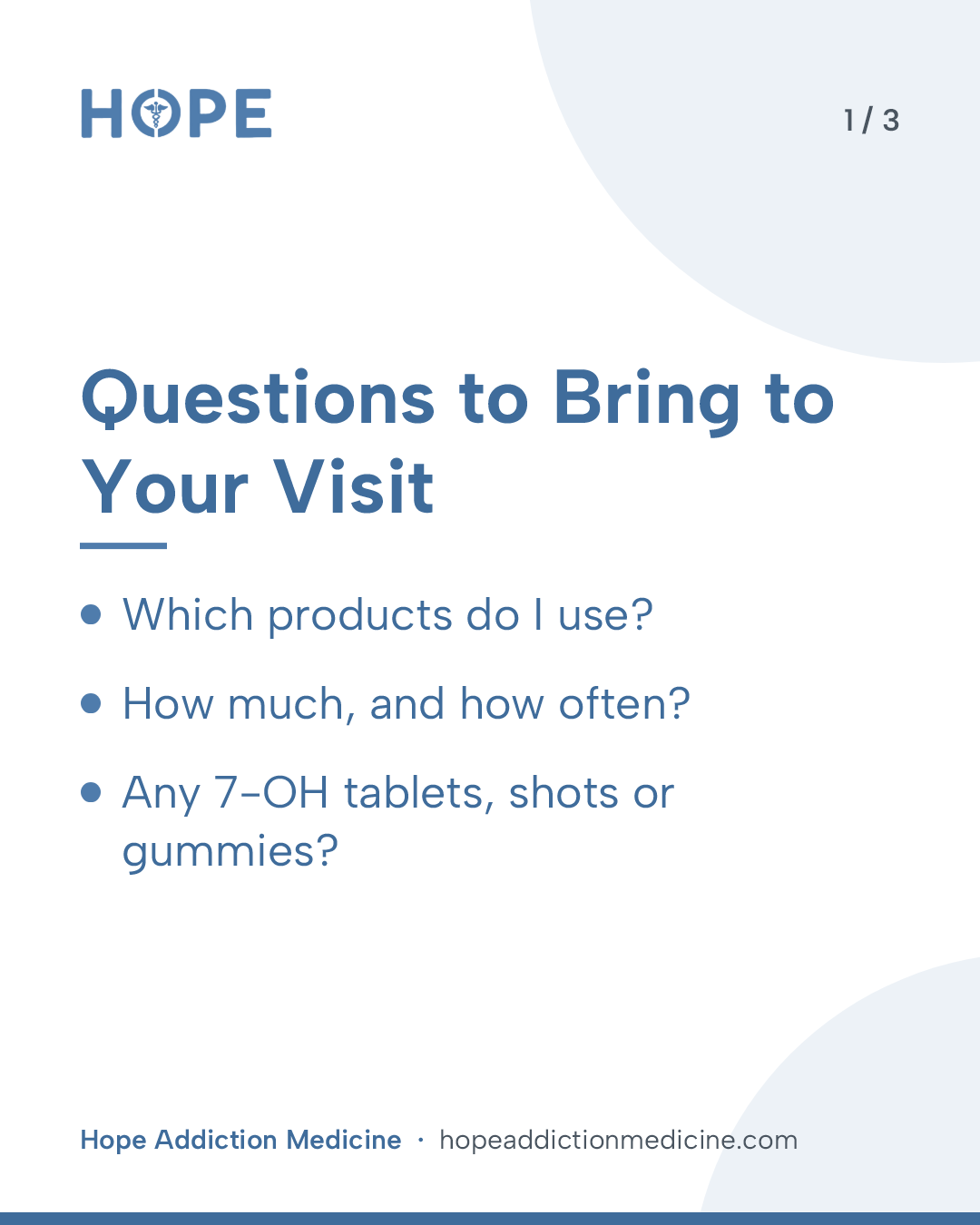
Questions to Bring to Your Visit
- Which products do I use?
- How much, and how often?
- Any 7-OH tablets, shots or gummies?
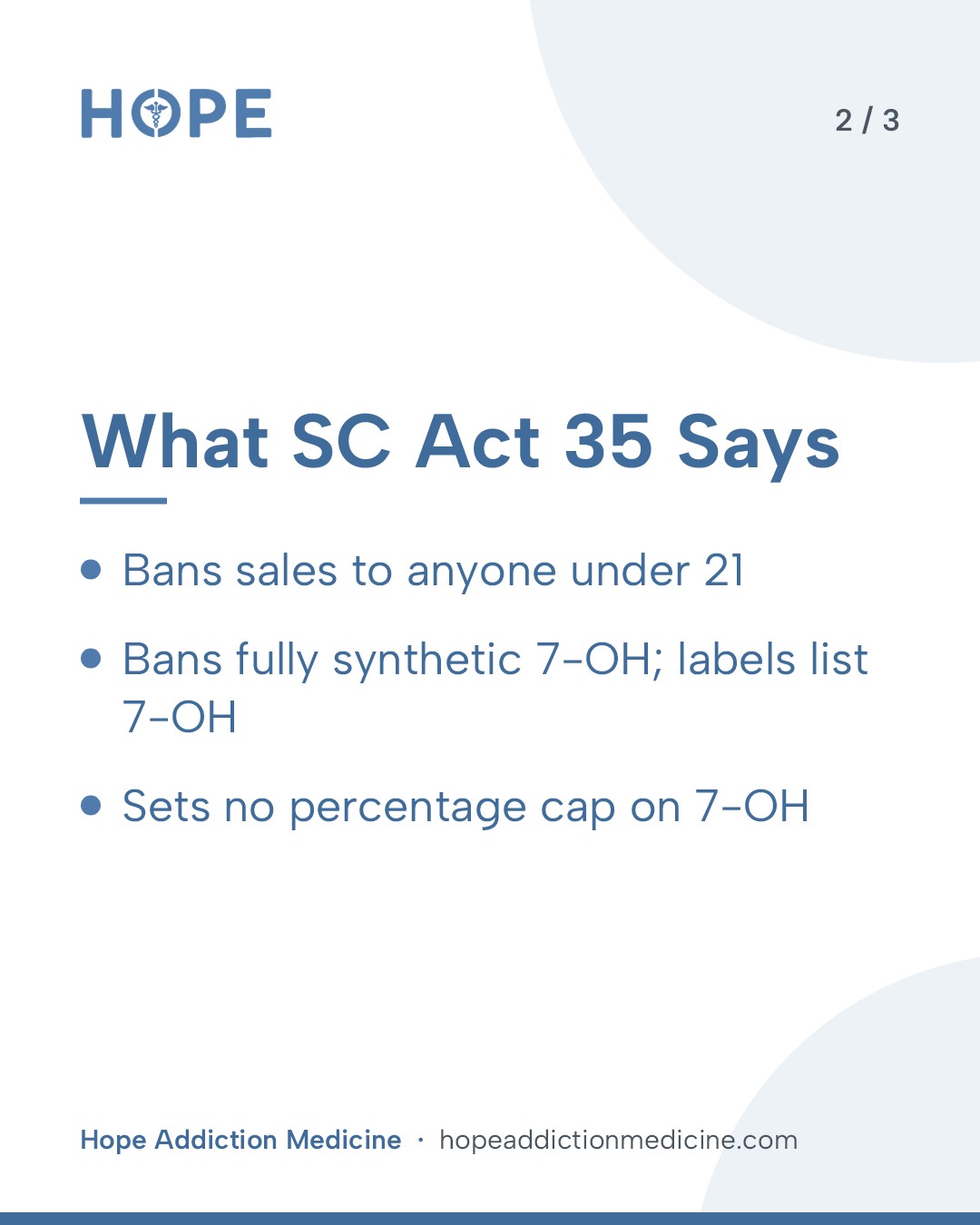
What SC Act 35 Says
- Bans sales to anyone under 21
- Bans fully synthetic 7-OH; labels list 7-OH
- Sets no percentage cap on 7-OH
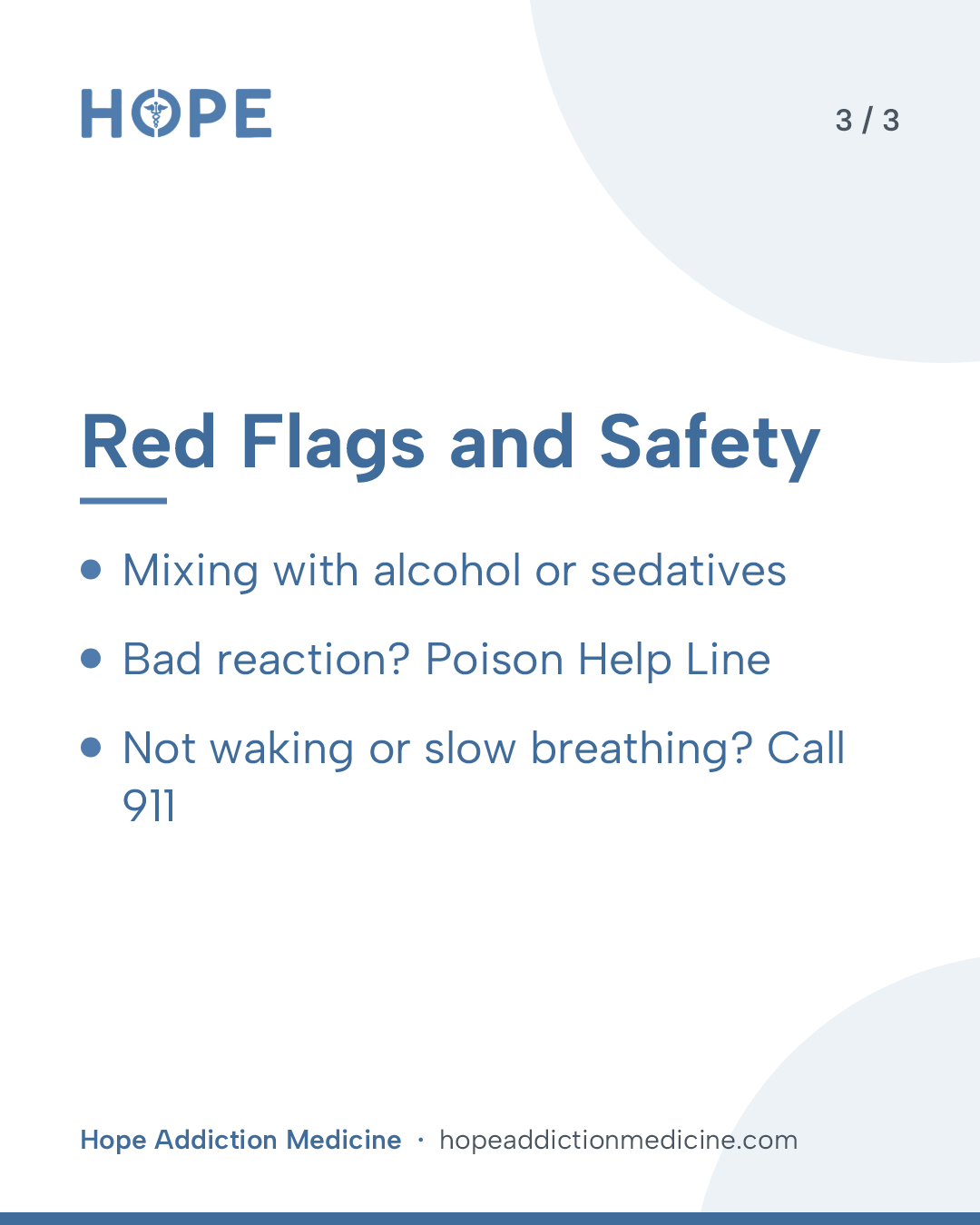
Red Flags and Safety
- Mixing with alcohol or sedatives
- Bad reaction? Poison Help Line
- Not waking or slow breathing? Call 911
What the guideline says
- Kratom is a plant whose main compound, mitragynine, acts on opioid receptors in the brain; 7-OH is found in only small amounts in the leaf, and some products concentrate it far beyond that.
- The FDA calls 7-OH a potent opioid and an emerging public health threat, says there are no FDA-approved 7-OH drugs, and says 7-OH is not lawful in dietary supplements and cannot lawfully be added to foods.
- People who use concentrated 7-OH products every day can develop dependence, and stopping suddenly after heavy daily use can bring withdrawal that feels like opioid withdrawal.
- South Carolina's Act 35 bans kratom sales to anyone under 21, bans fully synthetic 7-OH and requires labels to list 7-OH content; it sets no percentage cap, and the 2% cap in drafts and bill H.4030 was never enacted.
- NIDA notes there are no approved medical therapies specifically for kratom use disorder or withdrawal; a gradual taper under medical guidance is one option, and buprenorphine may be considered for significant dependence when it fits.
Source: FDA, Hiding in Plain Sight: 7-OH Products
Read the full article: Kratom vs 7-OH: Why Concentrated Products Are Different →
This guide is general health information and does not replace advice from your own provider.
Frequently Asked Questions
Tell your provider exactly which products you use, how much and how often, including any 7-OH tablets, shots or gummies.
No. Act 35 sets no percentage cap on 7-OH. A 2% cap appeared in drafts and in a separate bill, H.4030, but it was never enacted. Act 35 does ban sales to anyone under 21, bans fully synthetic 7-OH and requires labels to list 7-OH content.
The FDA says to call the Poison Help Line at 1-800-222-1222 if you think someone has had a bad reaction to a 7-OH product, and to call 911 for a life-threatening emergency.
Yes. Mixing kratom or 7-OH with alcohol, benzodiazepines, other sedatives or opioids raises the risk of dangerous side effects.