Thinking About Stopping Kratom? Start Here
Based on National Institute on Drug Abuse, Kratom (March 2026)
5 cards. Swipe or tap to see the next one.
What NIDA says about kratom withdrawal, why concentrated 7-OH products are different, other health risks and how a plan with a medical provider can help you stop.
Ready to Start Treatment?
Confidential, evidence-based care in West Ashley. Call to ask about the next available new-patient appointment.
In this guide
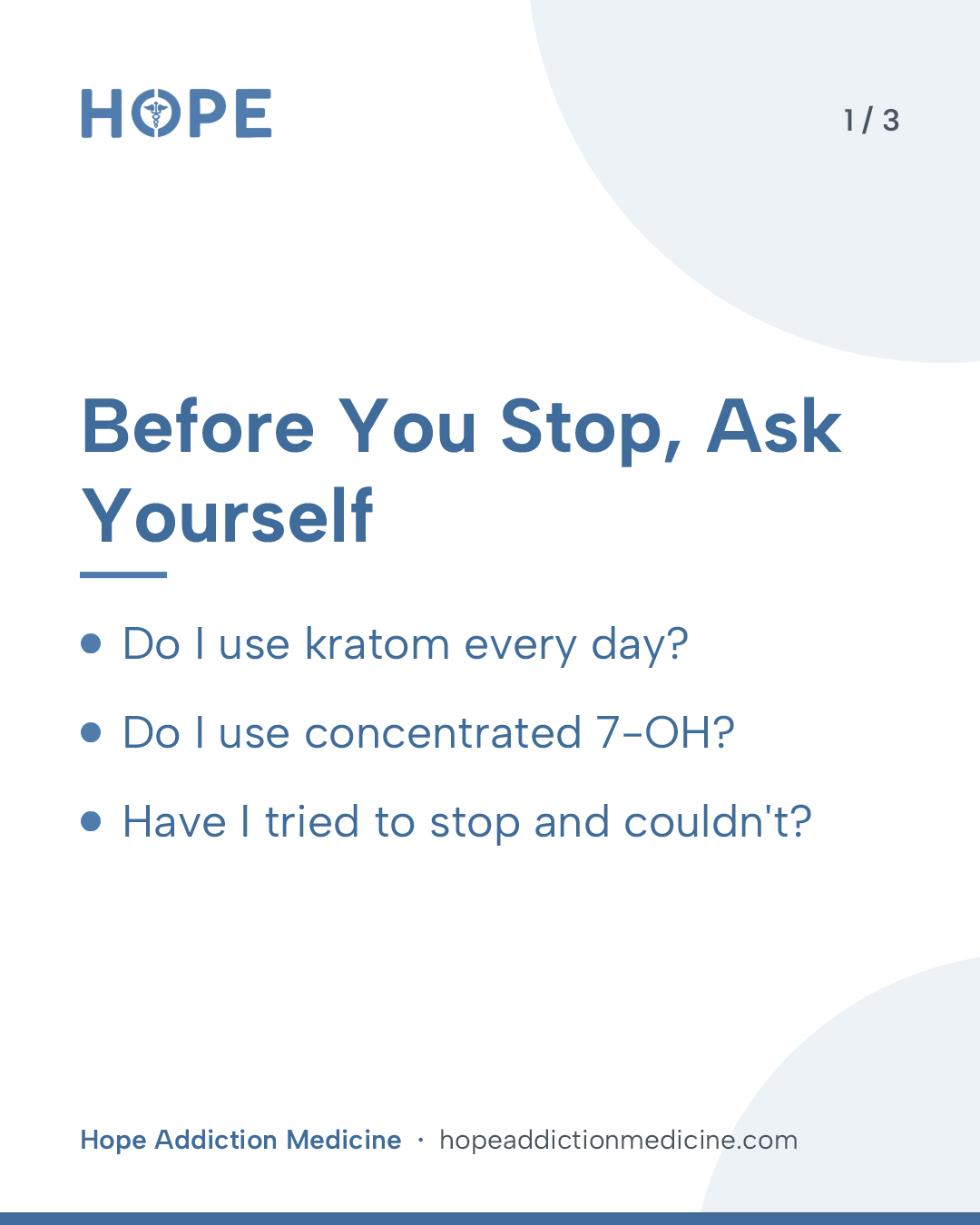
Before You Stop, Ask Yourself
- Do I use kratom every day?
- Do I use concentrated 7-OH?
- Have I tried to stop and couldn't?
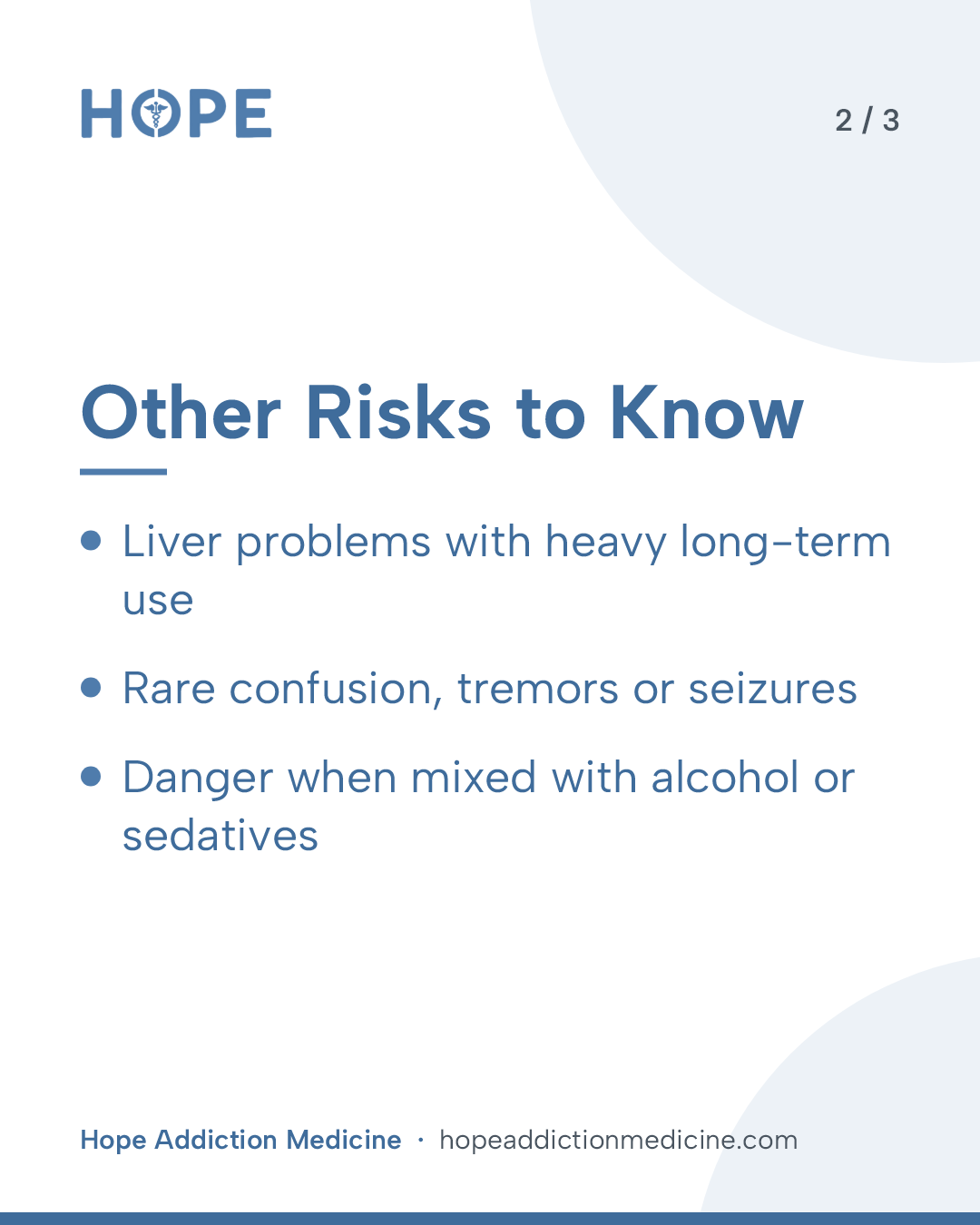
Other Risks to Know
- Liver problems with heavy long-term use
- Rare confusion, tremors or seizures
- Danger when mixed with alcohol or sedatives
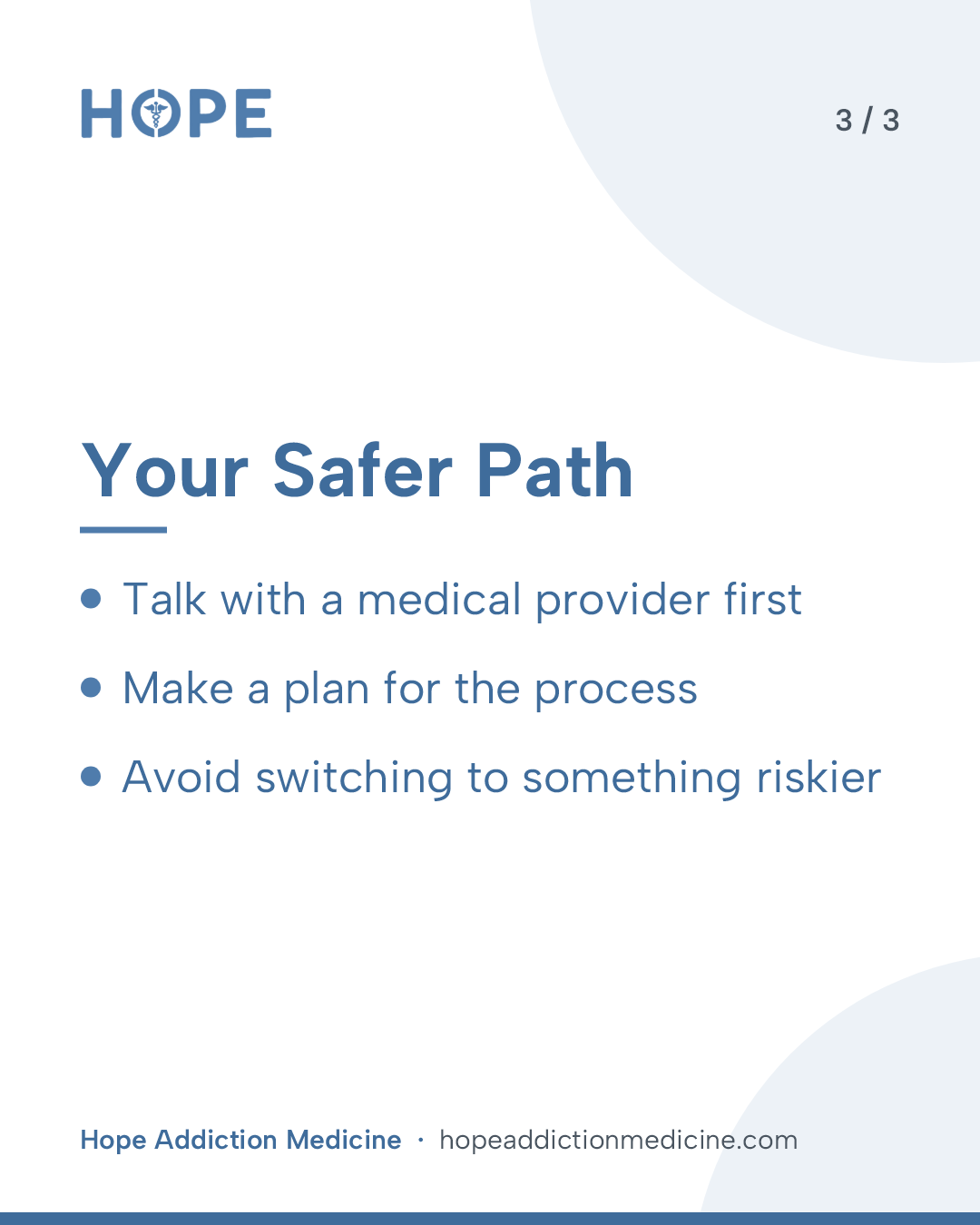
Your Safer Path
- Talk with a medical provider first
- Make a plan for the process
- Avoid switching to something riskier
What the guideline says
- NIDA says studies suggest people may experience mild to moderate withdrawal symptoms when they stop regular kratom use, and a minority of people report kratom-related withdrawal symptoms.
- More research is needed, and how much a person uses, how often and which products they use all seem to matter.
- People who use concentrated 7-OH products every day can develop dependence, and stopping suddenly after heavy daily use can bring withdrawal that feels like opioid withdrawal.
- NIDA says regular, long-term kratom use in large amounts may be associated with serious liver problems.
- NIDA notes there are no approved medical therapies specifically for kratom use disorder or withdrawal yet; a supervised taper is one option, and buprenorphine may be considered for significant dependence when it fits.
Source: National Institute on Drug Abuse, Kratom (March 2026)
Read the full article: Kratom Withdrawal: What to Expect and How Treatment Helps →
This guide is general health information and does not replace advice from your own provider.
Frequently Asked Questions
If you use small amounts now and then, you may be able to stop without help. If you use every day, use concentrated 7-OH products or have tried to stop and could not, talk with a medical provider first.
A plan makes the process safer and more comfortable, and it helps you avoid switching to something more dangerous to get through withdrawal.
NIDA says regular, long-term kratom use in large amounts may be associated with serious liver problems.
Clinicians have reported rare but serious effects, including confusion, tremors and seizures. Mixing kratom with alcohol, sedatives or opioids raises the risk of dangerous side effects.