
ADHD and addiction often show up in the same life. If you are an adult in Charleston who has wondered whether untreated attention problems played a part in your drinking or drug use, that is a fair question to bring to a visit. Here is what federal health agencies say about the link, why both conditions belong in one plan, and how stimulant treatment is handled in recovery, decided with a clinician who knows your full history.
How untreated ADHD and substance use are linked
The National Institute of Mental Health (NIMH) says ADHD symptoms begin in childhood and usually carry on into adulthood, and that teens and adults with ADHD are more likely to take risks such as using substances. MedlinePlus, from the National Library of Medicine, names untreated mental health conditions, ADHD among them, as one of the things that can raise the risk of drug addiction.
That does not mean ADHD causes addiction, or that everyone with ADHD will develop a substance use disorder. It means the two are worth looking at side by side. Restlessness, trouble focusing and acting on impulse can look different when someone is also drinking, using or going through withdrawal, and NIMH notes that conditions that occur together can be harder to diagnose and treat.
Wondering whether this describes you? Request an appointment at our West Ashley office and tell us about both.
Why both need treatment together
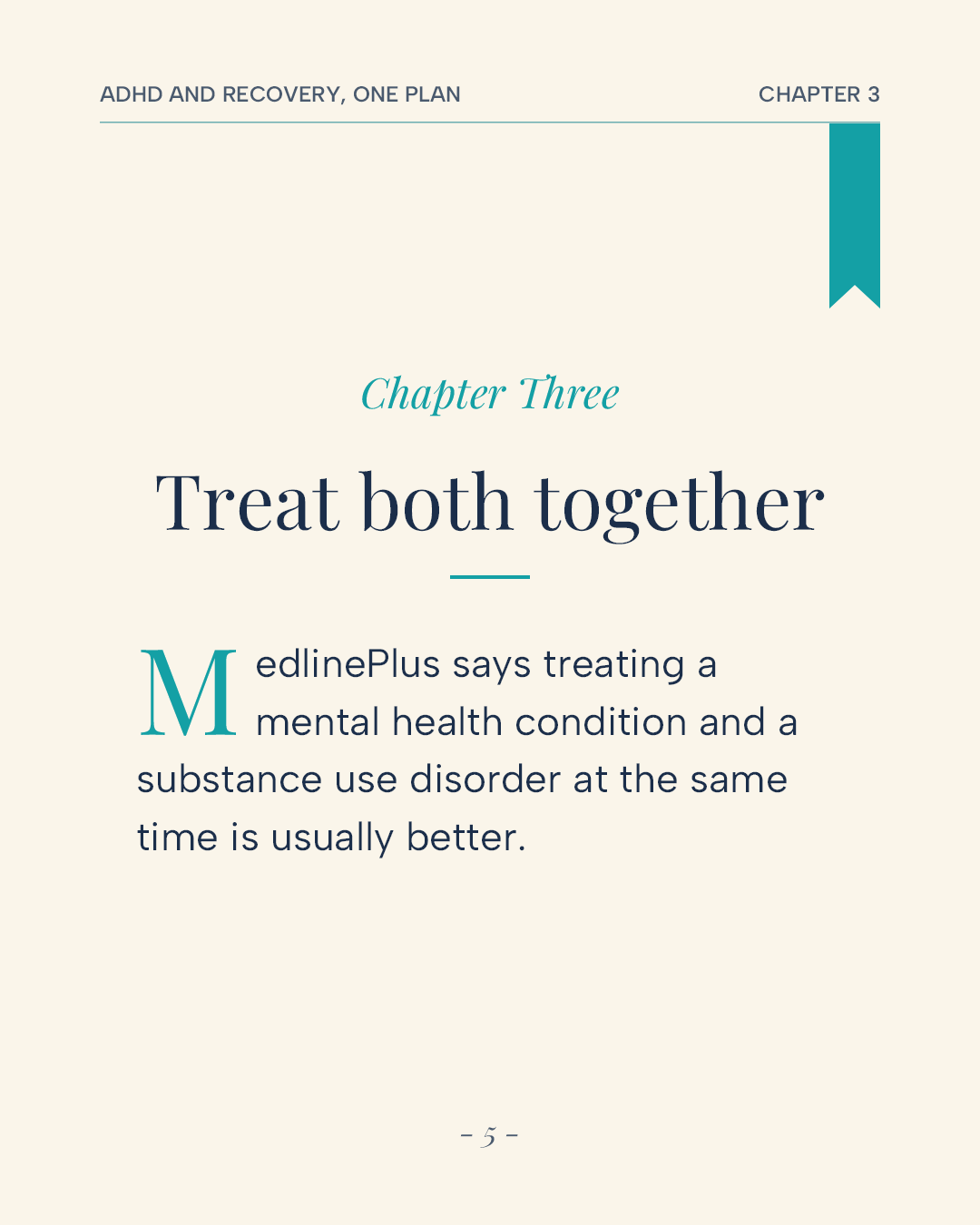
When a mental health condition and a substance use disorder happen at the same time, MedlinePlus calls it a dual diagnosis and says treating both at once is usually better than treating them one after the other. The options it lists include behavioral therapy, medicines for substance use and for mental health conditions, and support groups.
- An accurate picture first. A qualified clinician sorts out what is ADHD, what is substance use, and what may be withdrawal or another condition.
- One plan. Medicine for opioid or alcohol use disorder can sit in the same plan as care for attention and mood.
- Skills that serve both goals. Planning, follow-through and handling impulses matter for ADHD and for recovery.
NIMH lists medication and psychosocial treatments, such as cognitive behavioral therapy, as standard ADHD care. If you want to build those day-to-day skills through cognitive behavioral therapy (CBT), ask us what we can offer here, and we will help with a referral to a provider who evaluates or treats ADHD when that is the better fit.
Stimulant treatment in recovery: a decision made with your clinician
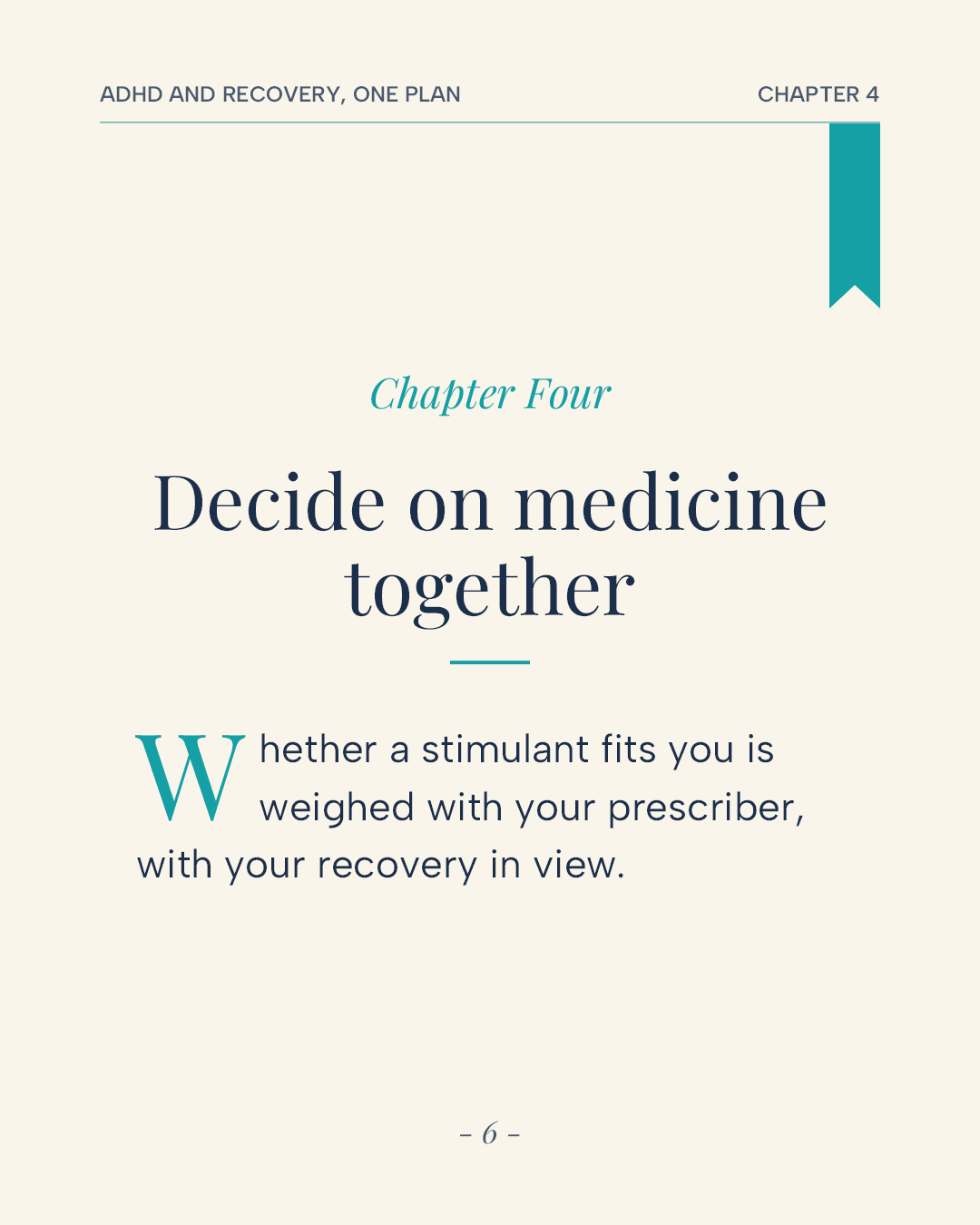
The National Institute on Drug Abuse (NIDA) says prescription stimulants are used for only a few conditions, ADHD among them. It also says they push up blood pressure and heart rate, that repeated misuse can bring on hostility or paranoia, and that high doses can cause a dangerously high body temperature and an irregular heartbeat. Whether a stimulant or another option fits you is a decision you make with your prescriber after weighing the risks and benefits, with your recovery in view.
If you take one, or one is offered to you:
- Tell every prescriber about your substance use history and every medicine you take, including buprenorphine or naltrexone.
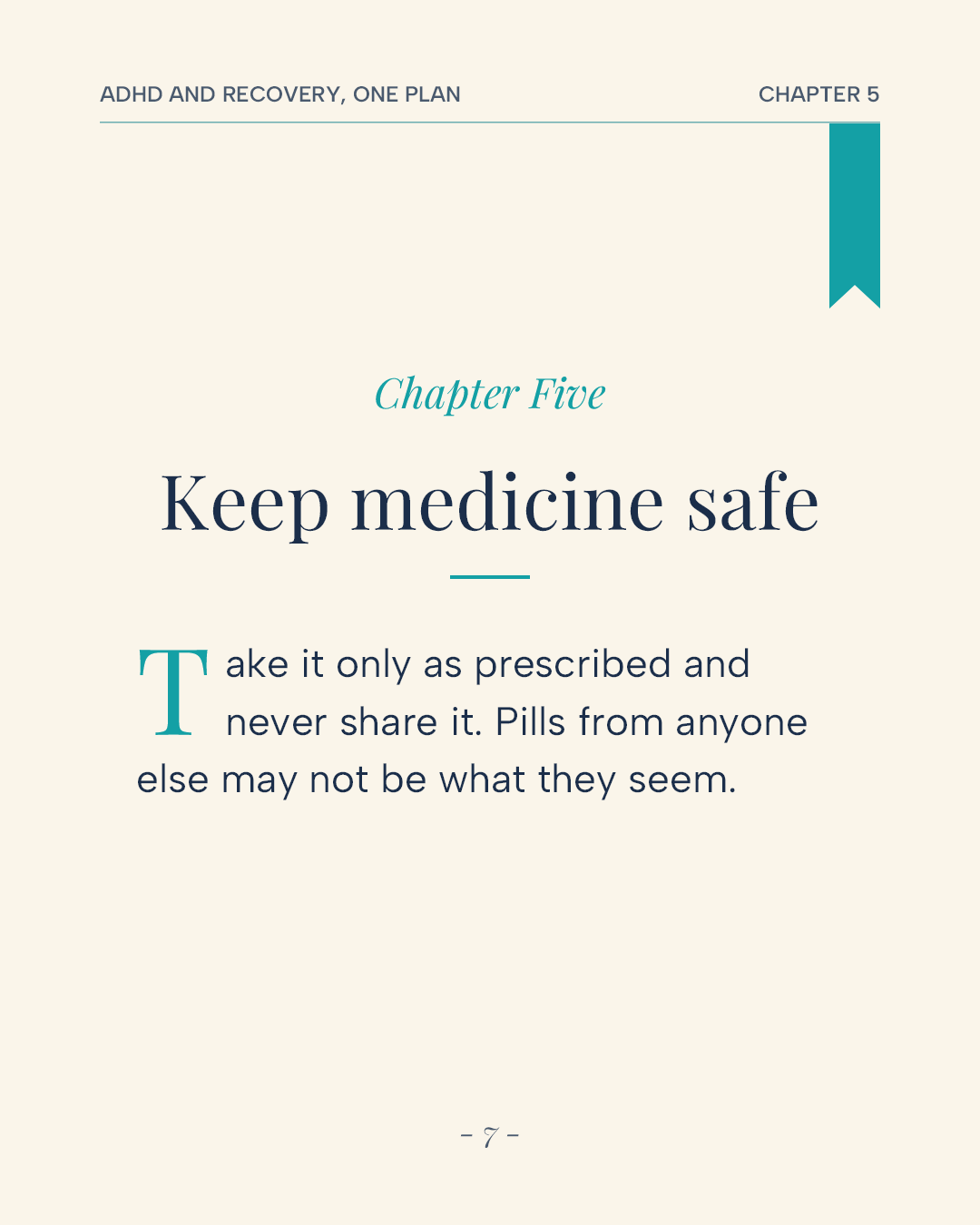
- Take it only as prescribed. MedlinePlus counts taking a bigger dose, or taking a medicine to get high, as misuse.
- Never share it, and never take pills from anyone else. MedlinePlus counts taking a medicine prescribed for someone else as misuse too.
- Tell your provider if cravings change or you find yourself taking more than planned. It is a signal to adjust the plan, not a failure.
A pill bought online or handed over by a friend may not be what it looks like. The CDC warns that illegally made fentanyl turns up in pressed pills and cannot be seen, smelled or tasted. Read what a fentanyl test strip can and cannot tell you.
If someone may be overdosing (they will not wake up, their breathing is slow or stopped, or their lips are blue), call 911 and give naloxone (Narcan) if you have it. Naloxone is sold without a prescription. If you are thinking about suicide, call or text 988.
Ready to talk it through with a provider? Request an appointment or call our office to ask about the next available new-patient appointment.
Ready to Start Treatment?
Confidential, evidence-based care in West Ashley. Call to ask about the next available new-patient appointment.
9 cards. Swipe or tap to see the next one.
What care looks like at Hope Addiction Medicine
Our team includes psychiatric nurse practitioners who manage psychiatric medicines as well as medicine for opioid use disorder, and a licensed professional counselor. We see adults 18 and older from across the Charleston area, from Summerville to Mount Pleasant, at our West Ashley office. Read how a substance use disorder is diagnosed and why medicine and counseling work together.
Learn more about treating mental health and substance use together, opioid treatment and alcohol use disorder care in West Ashley.
In a crisis
If you are thinking about suicide, call or text 988. Our office is not an emergency service, so for any emergency call 911 or go to the nearest emergency room.
Sources: NIMH, Attention-Deficit/Hyperactivity Disorder (ADHD); MedlinePlus, Drug Use and Addiction; MedlinePlus, Dual Diagnosis; NIDA, What Classes of Prescription Drugs Are Commonly Misused?; MedlinePlus, Prescription Drug Misuse; CDC, Fentanyl Facts.
Help at Hope Addiction Medicine
Our team combines medication with counseling and behavioral therapies, through hybrid in-person and virtual care from our West Ashley office in Charleston, with urine drug screens at a local lab and periodic vitals checks close to home. Call to ask about the next available new-patient appointment. Request an appointment or call our office.
This article is general information, not medical advice, and does not create a patient–provider relationship. Every situation is different, so see a provider who can evaluate yours and develop a plan of care. Any medication discussed here may not be right for you: the right choice depends on your diagnoses, other health conditions and current medicines, so take medication only as directed by the provider managing your care. If you are ever in doubt about an emergency, call 911 or go to the nearest emergency room. If someone may be overdosing, call 911 and give naloxone if you have it.
Frequently Asked Questions
It can raise the risk. NIMH says teens and adults with ADHD are more likely to take risks such as substance use, and MedlinePlus lists untreated mental health conditions, including ADHD, among the things that raise the risk of addiction. It does not mean addiction is certain.
MedlinePlus says that when a mental health condition and a substance use disorder occur together, treating both at once is usually better than treating them separately.
Some people do. It is a decision you make with your prescriber after weighing the risks and benefits with your recovery in view. Take it only as prescribed, never share it, and tell every provider you see about it.
Yes. MedlinePlus counts taking a medicine prescribed for someone else as prescription drug misuse. Pills from a friend or an online seller may also contain fentanyl, the CDC warns.
Hope Addiction Medicine in West Ashley treats adults 18 and older. Our psychiatric nurse practitioners manage psychiatric medicines and medicine for opioid use disorder, and we help with a referral to a provider who evaluates ADHD when that fits better.