
7-hydroxymitragynine, usually called 7-OH, is a compound found in small amounts in the kratom plant. Some products concentrate it far beyond what the leaf contains, and those products are sold in gas stations, vape shops and online. Here is what South Carolina law and federal regulators say about it, and what to do if you are struggling to stop.
What South Carolina's Act 35 does
South Carolina's Kratom Consumer Protection Act, Act 35, was signed on May 12, 2025. It:
- Bans the sale of kratom products to anyone under 21
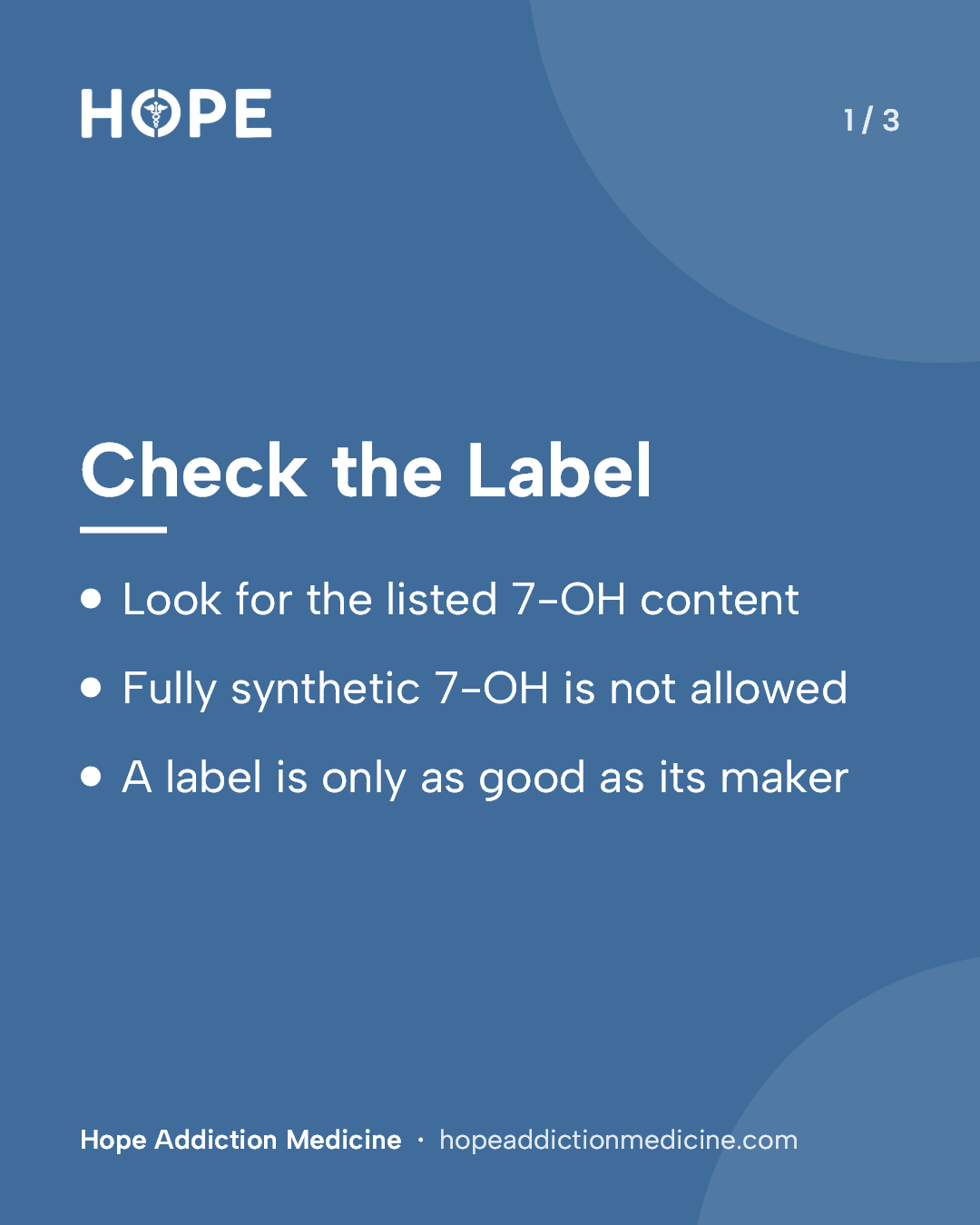
- Bans fully synthetic 7-OH
- Requires labels to list each product's 7-OH content
What it does not do
The law sets no percentage cap on how much 7-OH a product may contain. A 2% cap appeared in drafts and in a separate bill, H.4030, but it was never enacted. So a concentrated 7-OH product can still be legal to sell to adults in South Carolina, as long as the 7-OH is not fully synthetic and the label lists the content.
What the FDA has said
On July 29, 2025, the FDA announced it was recommending a scheduling action under the Controlled Substances Act to control certain 7-OH products. The agency described 7-OH as a concentrated byproduct of the kratom plant and said the action was not focused on natural kratom leaf products. A recommendation is a step in a federal process, so check current rules rather than assuming any product is safe because it is sold openly.
Legal does not mean safe
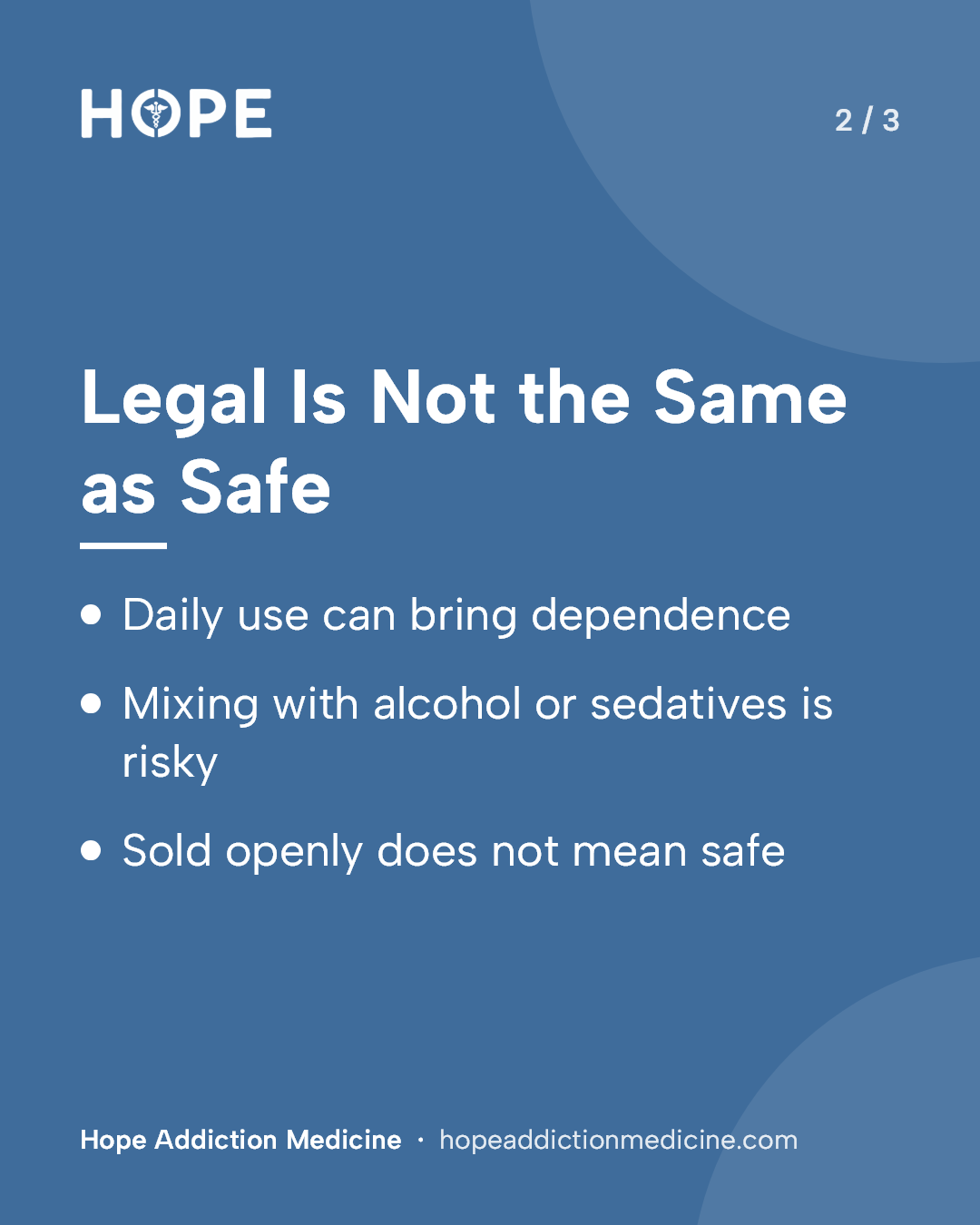
7-OH acts on the same brain receptors as opioids. People who use concentrated products every day can develop dependence and withdrawal when they try to stop, and mixing them with alcohol, sedatives or other opioids raises the risk of dangerous side effects. Product strength varies, and labels are only as reliable as the company behind them.
Ready to Start Treatment?
Confidential, evidence-based care in West Ashley. Call to ask about the next available new-patient appointment.
5 cards. Swipe or tap to see the next one.
If you cannot stop on your own
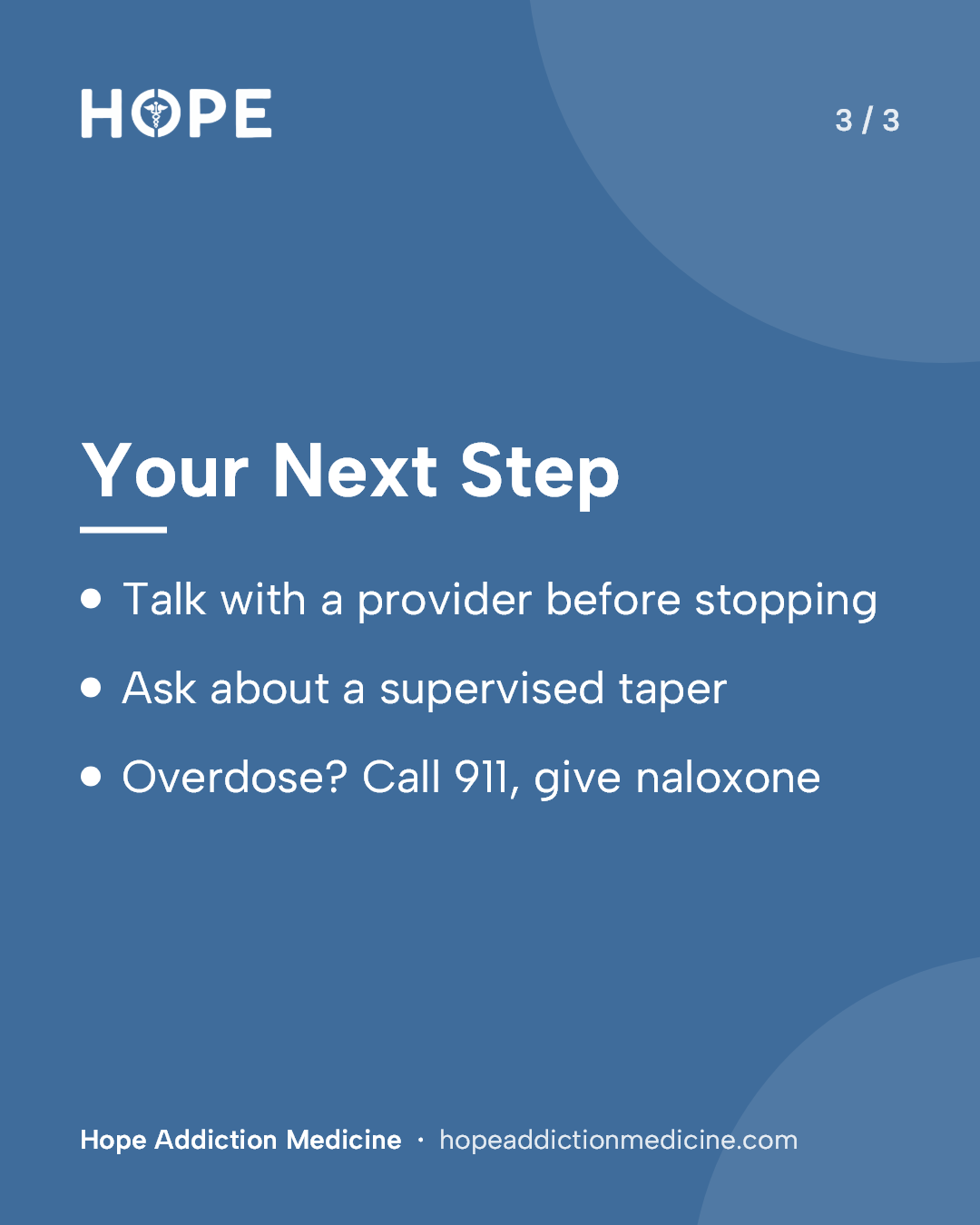
Stopping suddenly after heavy daily use can bring withdrawal that feels like opioid withdrawal. Treatment starts with an honest medical evaluation of what you take, how much and for how long. Options include a supervised taper, and for significant dependence, buprenorphine may be considered when it fits; research is still limited, but published case reports and clinical experience suggest it can help with withdrawal and cravings. Read more about our kratom and 7-OH treatment.
Sources: FDA, FDA Takes Steps to Restrict 7-OH Opioid Products (July 29, 2025); South Carolina Kratom Consumer Protection Act, Act 35 of 2025.
Help at Hope Addiction Medicine
Our team combines medication with counseling and behavioral therapies, through hybrid in-person and virtual care from our West Ashley office in Charleston, with urine drug screens at a local lab and periodic vitals checks close to home. Call to ask about the next available new-patient appointment. Request an appointment or call our office.
This article is general information, not medical advice, and does not create a patient–provider relationship. Every situation is different, so see a provider who can evaluate yours and develop a plan of care. Any medication discussed here may not be right for you: the right choice depends on your diagnoses, other health conditions and current medicines, so take medication only as directed by the provider managing your care. If you are ever in doubt about an emergency, call 911 or go to the nearest emergency room. If someone may be overdosing, call 911 and give naloxone if you have it.
Frequently Asked Questions
South Carolina's Act 35, signed May 12, 2025, bans kratom sales to anyone under 21, bans fully synthetic 7-OH and requires labels to list 7-OH content. It sets no percentage cap, so labeled, non-synthetic 7-OH products can still be sold to adults.
No. A 2% cap appeared in drafts and in bill H.4030, but it was never enacted. Act 35 has no percentage cap.
On July 29, 2025, the FDA announced it was recommending a scheduling action under the Controlled Substances Act to control certain 7-OH products, while saying it was not focused on natural kratom leaf.