7-OH in South Carolina: The Law, the FDA and Your Health
Based on FDA, FDA Takes Steps to Restrict 7-OH Opioid Products (July 29, 2025)
5 cards. Swipe or tap to see the next one.
What South Carolina's Act 35 bans, why it sets no percentage cap on 7-OH, what the FDA announced in 2025 and where to get help if 7-OH has become hard to stop.
Ready to Start Treatment?
Confidential, evidence-based care in West Ashley. Call to ask about the next available new-patient appointment.
In this guide
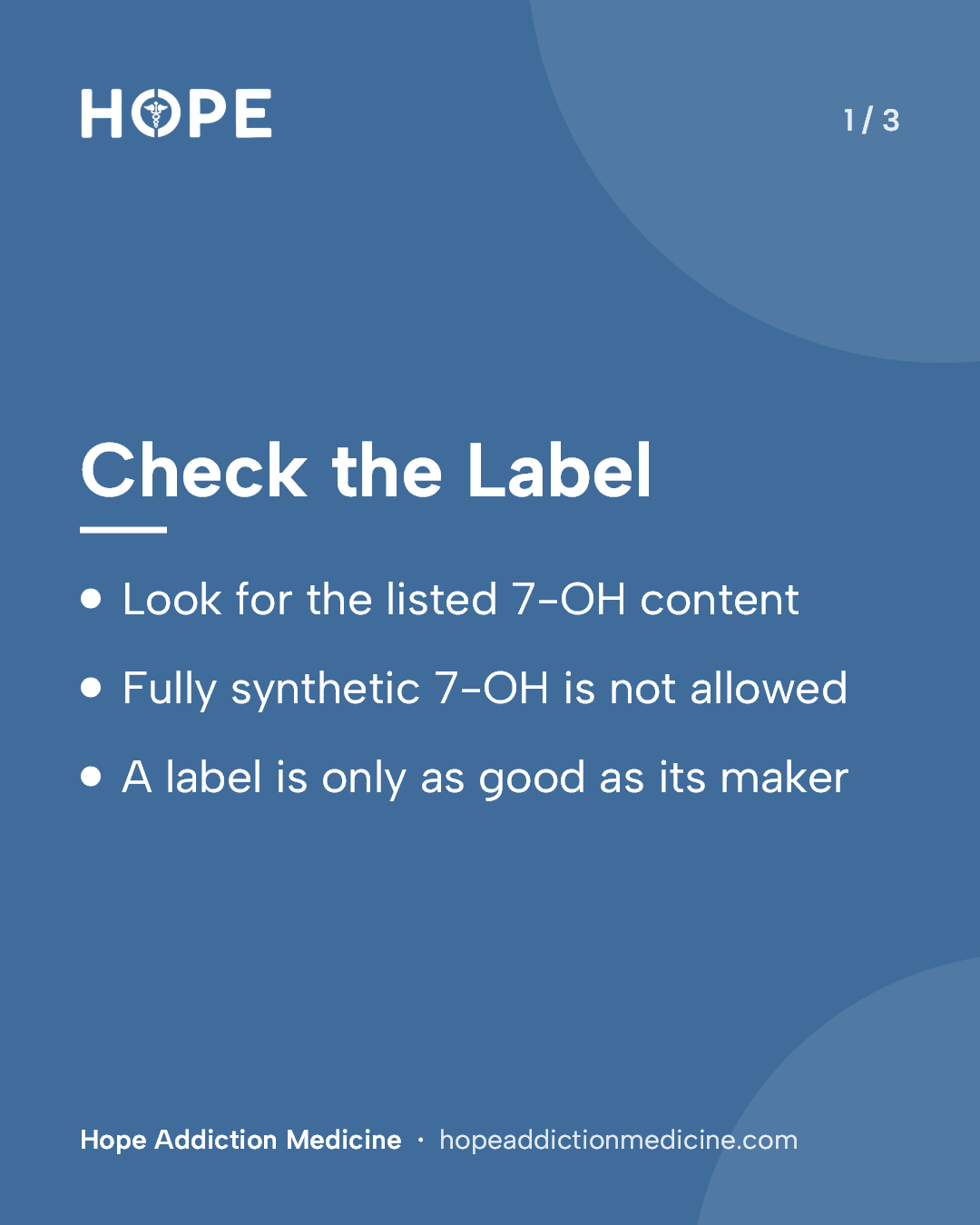
Check the Label
- Look for the listed 7-OH content
- Fully synthetic 7-OH is not allowed
- A label is only as good as its maker
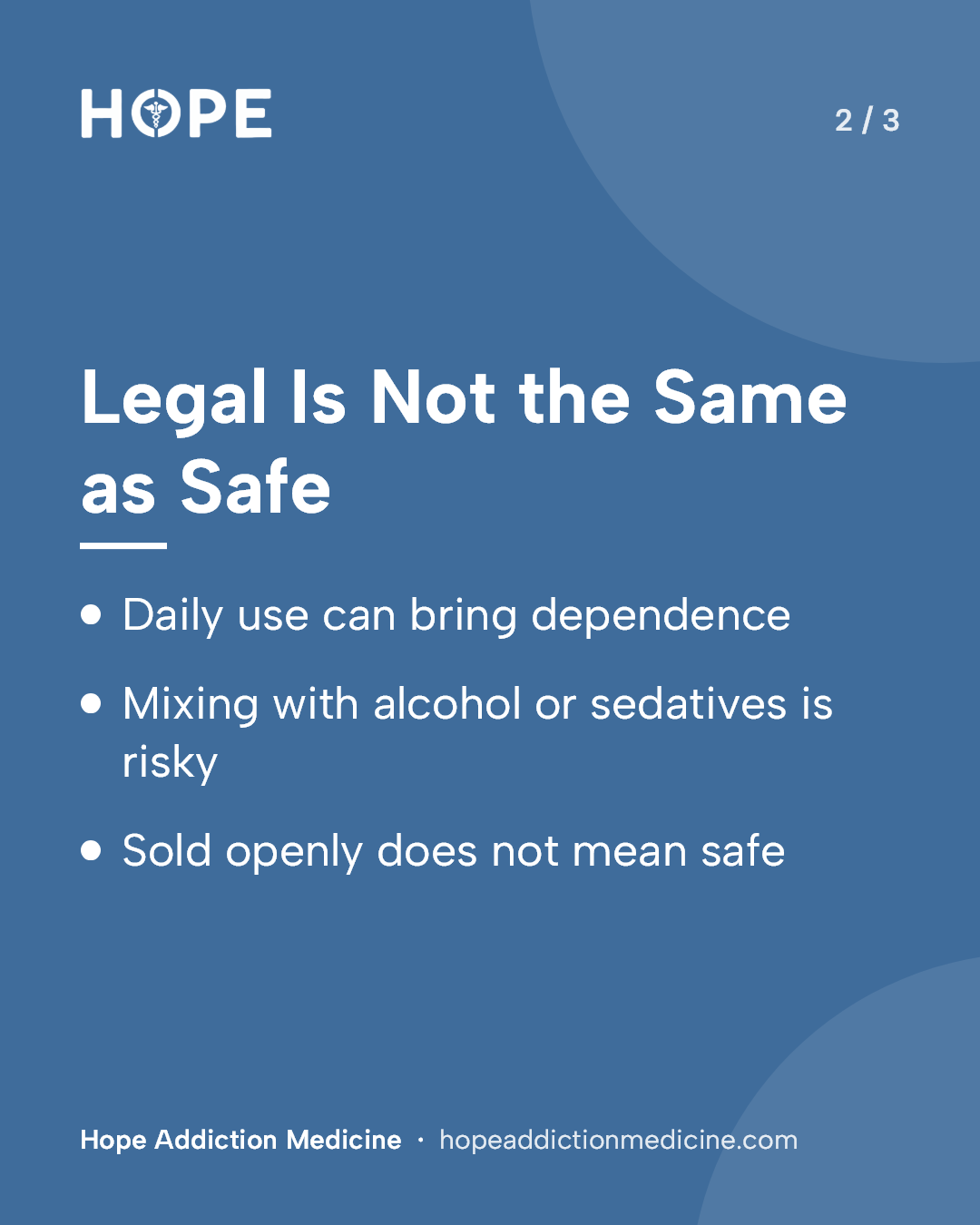
Legal Is Not the Same as Safe
- Daily use can bring dependence
- Mixing with alcohol or sedatives is risky
- Sold openly does not mean safe
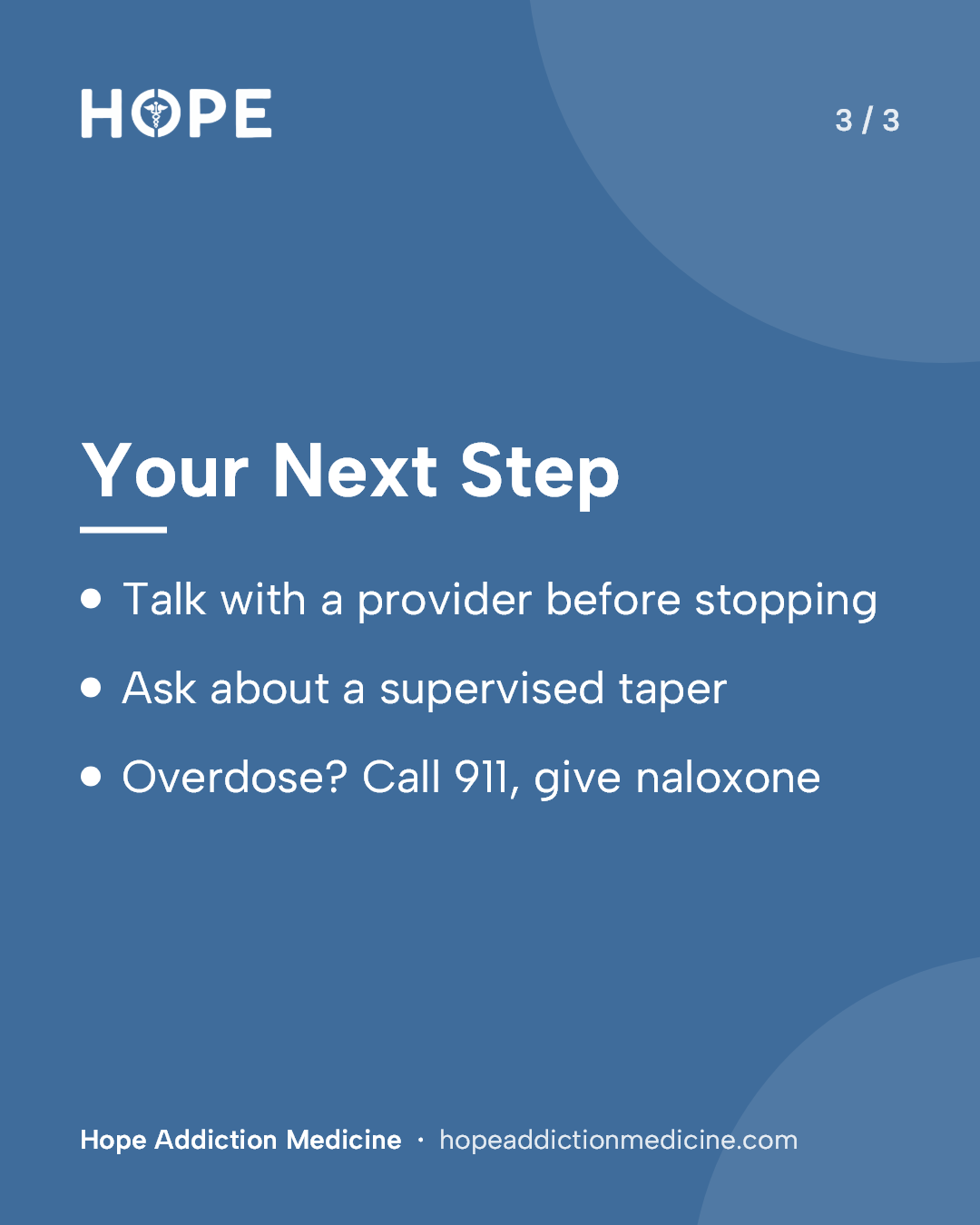
Your Next Step
- Talk with a provider before stopping
- Ask about a supervised taper
- Overdose? Call 911, give naloxone
What the guideline says
- South Carolina's Kratom Consumer Protection Act, Act 35, was signed on May 12, 2025, and bans the sale of kratom products to anyone under 21.
- Act 35 also bans fully synthetic 7-OH and requires labels to list each product's 7-OH content.
- The law sets no percentage cap on 7-OH. A 2% cap appeared in drafts and in bill H.4030, but it was never enacted.
- On July 29, 2025, the FDA announced it was recommending a scheduling action under the Controlled Substances Act to control certain 7-OH products, and said it was not focused on natural kratom leaf.
- 7-OH acts on the same brain receptors as opioids, so people who use concentrated products every day can develop dependence and withdrawal.
- Treatment starts with an honest medical evaluation; options include a supervised taper, and buprenorphine may be considered for significant dependence when it fits.
Source: FDA, FDA Takes Steps to Restrict 7-OH Opioid Products (July 29, 2025)
Read the full article: Is 7-OH Legal in South Carolina? What Act 35 Does and Doesn't Do →
This guide is general health information and does not replace advice from your own provider.
Frequently Asked Questions
On July 29, 2025, the FDA announced it was recommending a scheduling action under the Controlled Substances Act to control certain 7-OH products. The agency described 7-OH as a concentrated byproduct of the kratom plant.
The FDA said the action was not focused on natural kratom leaf products. Its recommendation covers certain 7-OH products, which it described as a concentrated byproduct of the plant.
Yes. Mixing concentrated 7-OH products with alcohol, sedatives or other opioids raises the risk of dangerous side effects. If someone may be overdosing, call 911 and give naloxone if you have it.
With an honest medical evaluation of what you take, how much and for how long. Options include a supervised taper, and for significant dependence, buprenorphine may be considered when it fits. Research is still limited, but published case reports and clinical experience suggest it can help with withdrawal and cravings.