Checking In on Your Drinking: Drinks, Screens and Signs
Based on NIAAA Core Resource on Alcohol, Screen and Assess
5 cards. Swipe or tap to see the next one.
What counts as one drink, how NIAAA defines heavy and binge drinking, the two quick screens clinicians use and the 11 signs behind an alcohol use disorder diagnosis.
Ready to Start Treatment?
Confidential, evidence-based care in West Ashley. Call to ask about the next available new-patient appointment.
In this guide
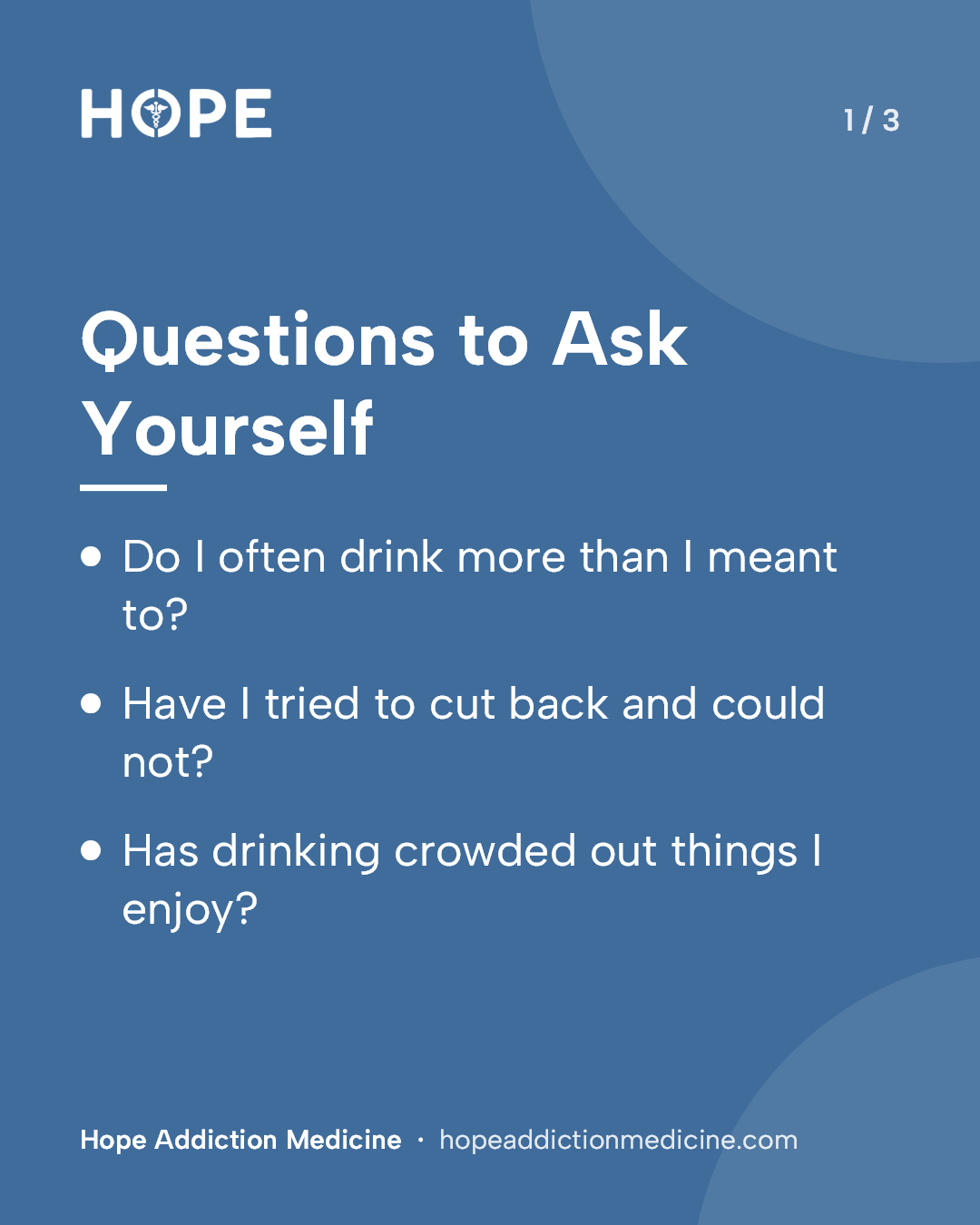
Questions to Ask Yourself
- Do I often drink more than I meant to?
- Have I tried to cut back and could not?
- Has drinking crowded out things I enjoy?
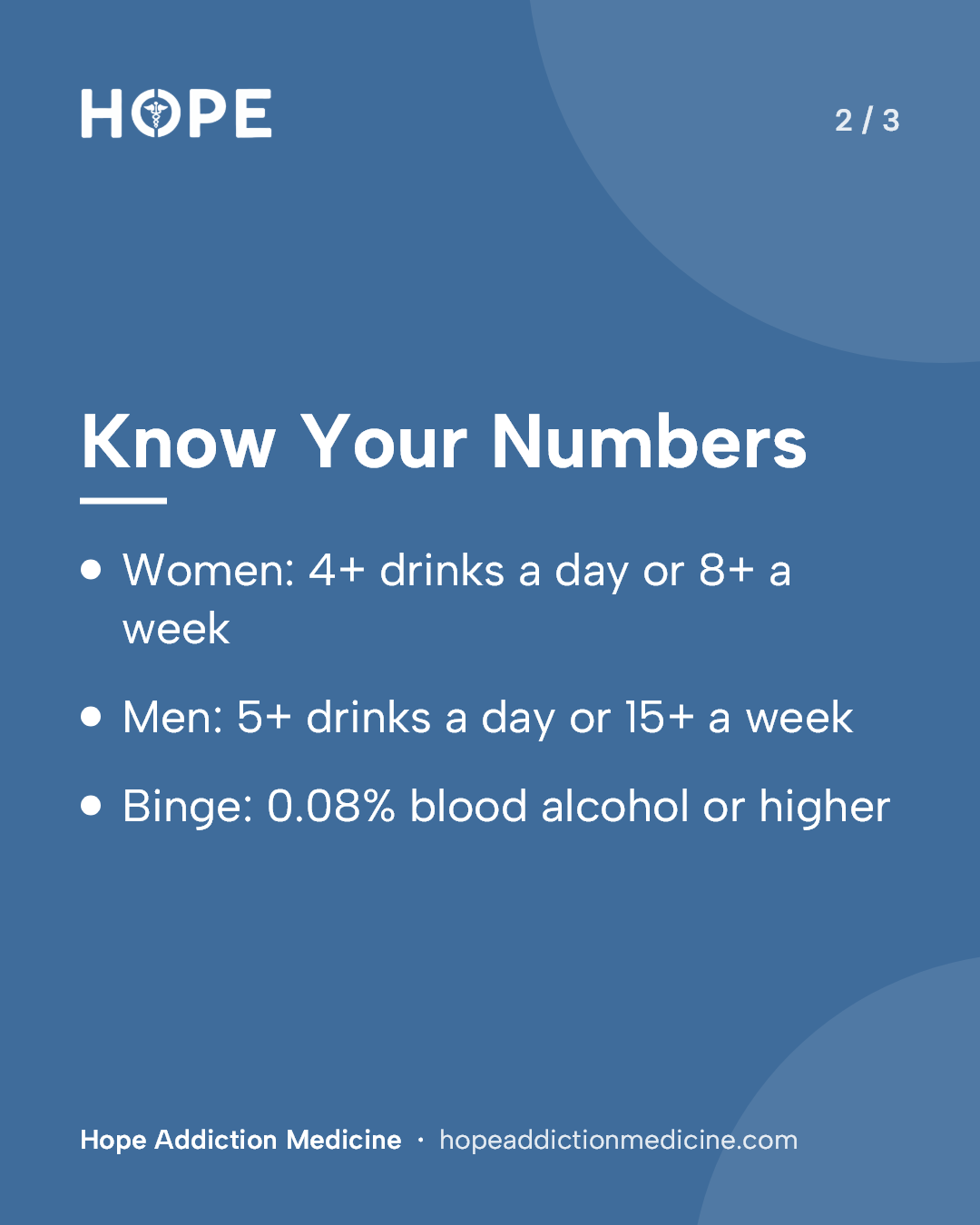
Know Your Numbers
- Women: 4+ drinks a day or 8+ a week
- Men: 5+ drinks a day or 15+ a week
- Binge: 0.08% blood alcohol or higher
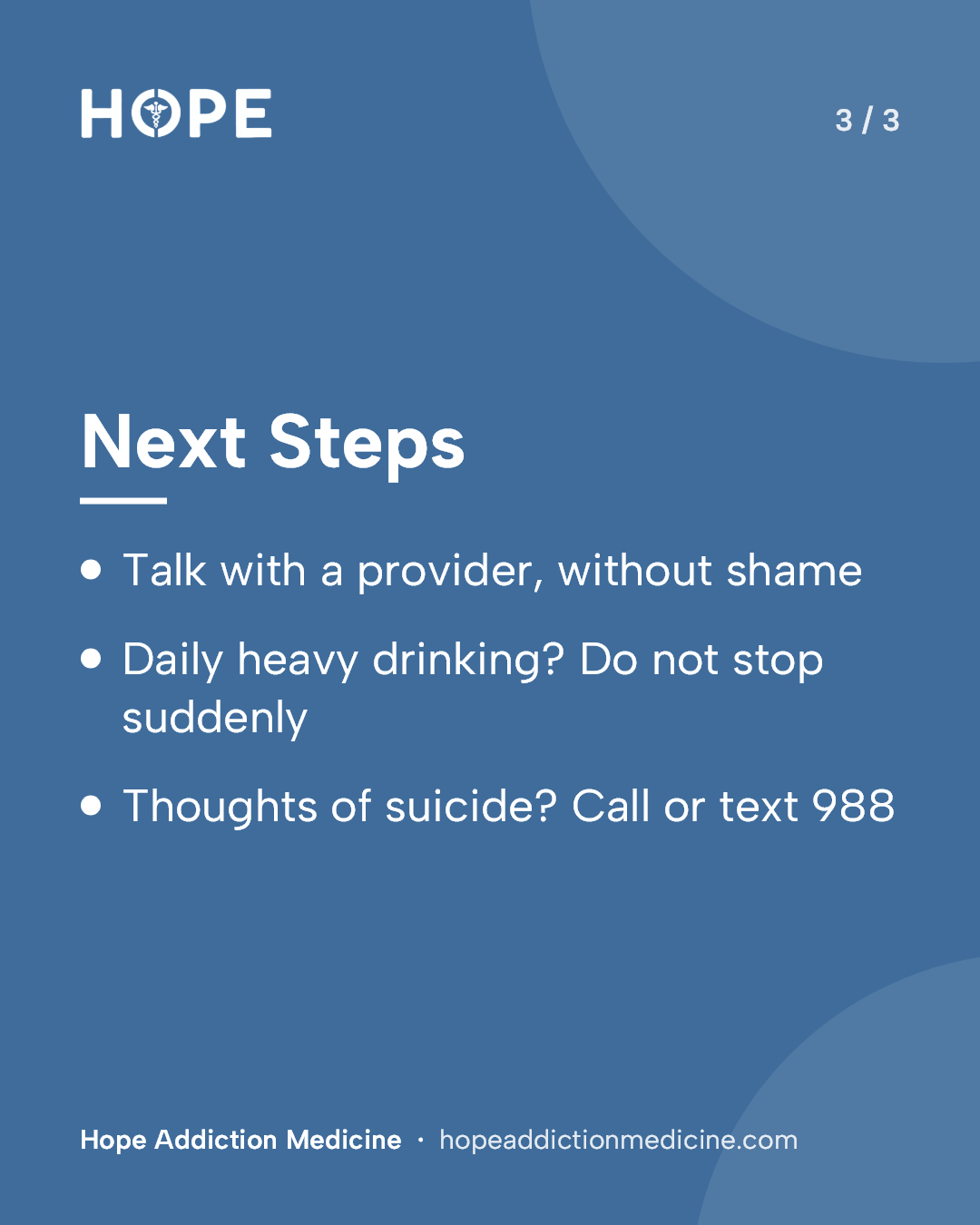
Next Steps
- Talk with a provider, without shame
- Daily heavy drinking? Do not stop suddenly
- Thoughts of suicide? Call or text 988
What the guideline says
- NIAAA describes alcohol use disorder as a medical condition in which a person has trouble stopping or controlling their drinking; it can be mild, moderate or severe, and it is treatable.
- A standard drink holds about 14 grams of pure alcohol: 12 ounces of regular beer, 5 ounces of table wine or 1.5 ounces of 80-proof liquor, NIAAA says.
- NIAAA defines heavy drinking as 4 or more drinks on any day or 8 or more a week for women, and 5 or more on any day or 15 or more a week for men.
- The single question and the 3-question AUDIT-C are quick screens; a screen tells you whether to talk further, but it is not a diagnosis.
- A qualified clinician diagnoses alcohol use disorder with DSM-5-TR criteria; NIAAA rates 2 or 3 signs as mild, 4 or 5 as moderate and 6 or more as severe.
- If you drink heavily every day, do not stop suddenly before talking with a medical provider, because alcohol withdrawal can cause seizures and delirium tremens.
Source: NIAAA Core Resource on Alcohol, Screen and Assess
This guide is general health information and does not replace advice from your own provider.
Frequently Asked Questions
NIAAA's plain-language questions about the past year include drinking more or longer than planned, trying to cut down and not managing it, strong urges to drink, drinking getting in the way of home, work or school, and needing much more alcohol to get the same effect.
Following DSM-5-TR, NIAAA rates two or three signs as mild, four or five as moderate, and six or more as severe. Only a clinician who knows your history can make the diagnosis.
No. A screen tells you and your provider whether to talk further. After a positive screen, a qualified clinician asks about symptoms using the DSM-5-TR criteria.