
Most people who wonder whether they drink too much would never use the word alcoholic about themselves, and clinicians do not use it as a diagnosis. The medical name is alcohol use disorder. The National Institute on Alcohol Abuse and Alcoholism (NIAAA) describes it as a medical condition in which a person has trouble stopping or controlling their drinking. It can be mild, moderate or severe, and it is treatable.
What counts as one drink
NIAAA defines a standard drink as one that holds about 14 grams of pure alcohol: 12 ounces of regular beer at about 5% alcohol, 5 ounces of table wine at about 12%, or 1.5 ounces of 80-proof liquor. A tall craft beer, a generous pour of wine or a strong mixed drink can hold more than one.
Heavy drinking and binge drinking
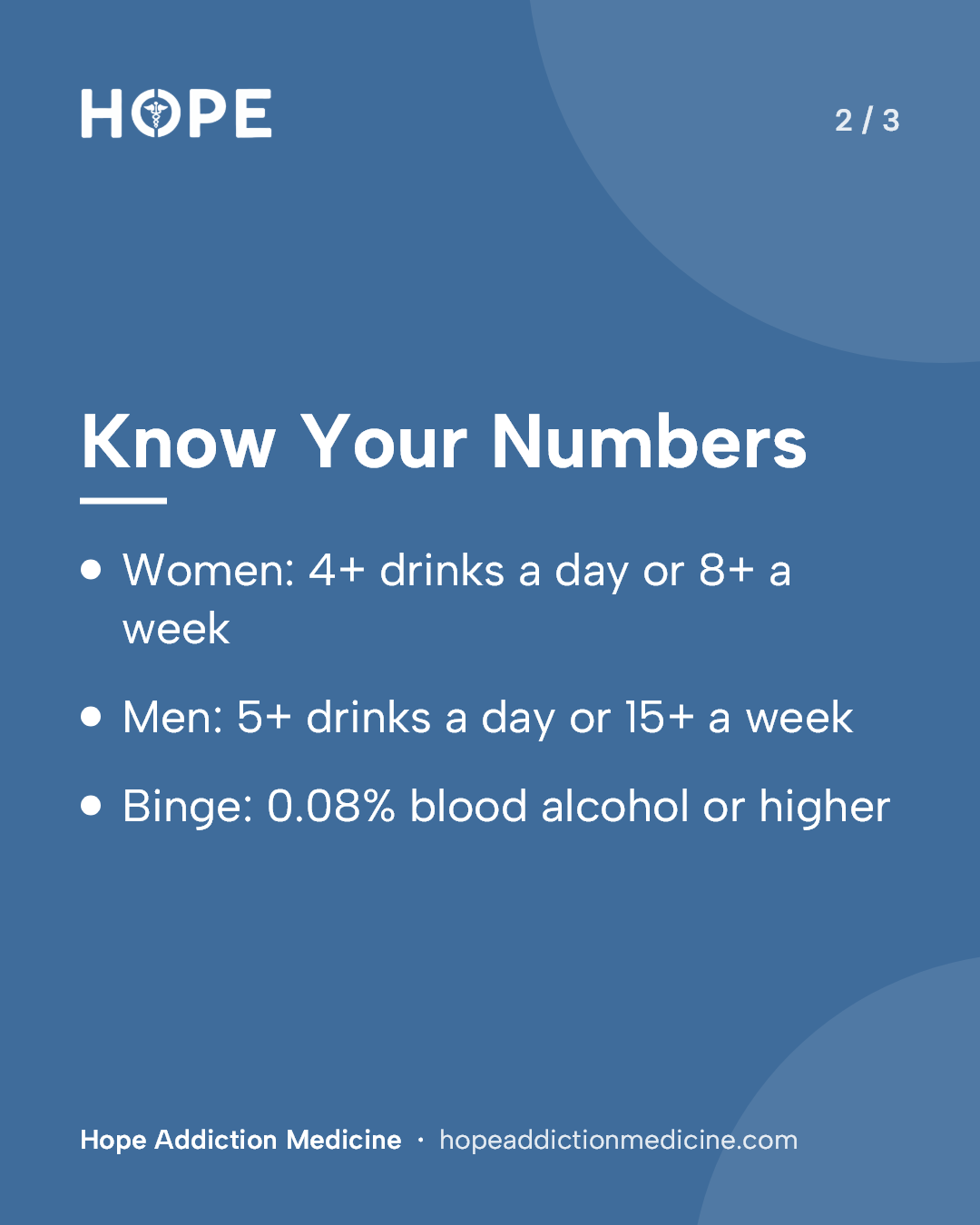
NIAAA defines heavy drinking for women as 4 or more drinks on any day or 8 or more in a week, and for men as 5 or more drinks on any day or 15 or more in a week. Binge drinking brings blood alcohol to 0.08% or higher, which typically happens when a woman has 4 or more drinks, or a man has 5 or more, within about 2 hours.
Two quick screening tools
Screening is how a clinician decides whether to look more closely. NIAAA points clinicians to two short tools:
- The single question: how many times in the past year have you had 4 or more drinks in a day (for women) or 5 or more (for men)? NIAAA says an answer of one or more calls for follow-up.
- The AUDIT-C: three questions drawn from the 10-question Alcohol Use Disorders Identification Test (AUDIT). They ask how often you had a drink in the past year, how many drinks you had on a typical drinking day, and how often you had 6 or more drinks on one occasion. NIAAA says the higher the score, the more likely alcohol is affecting your health and safety.
A screen is not a diagnosis. It tells you and your provider whether to talk further.
The signs behind a diagnosis
After a positive screen, a qualified clinician asks about symptoms using the criteria in the DSM-5-TR, the American Psychiatric Association's diagnostic manual. NIAAA turns those criteria into plain questions about the past year. In our own words, they cover:
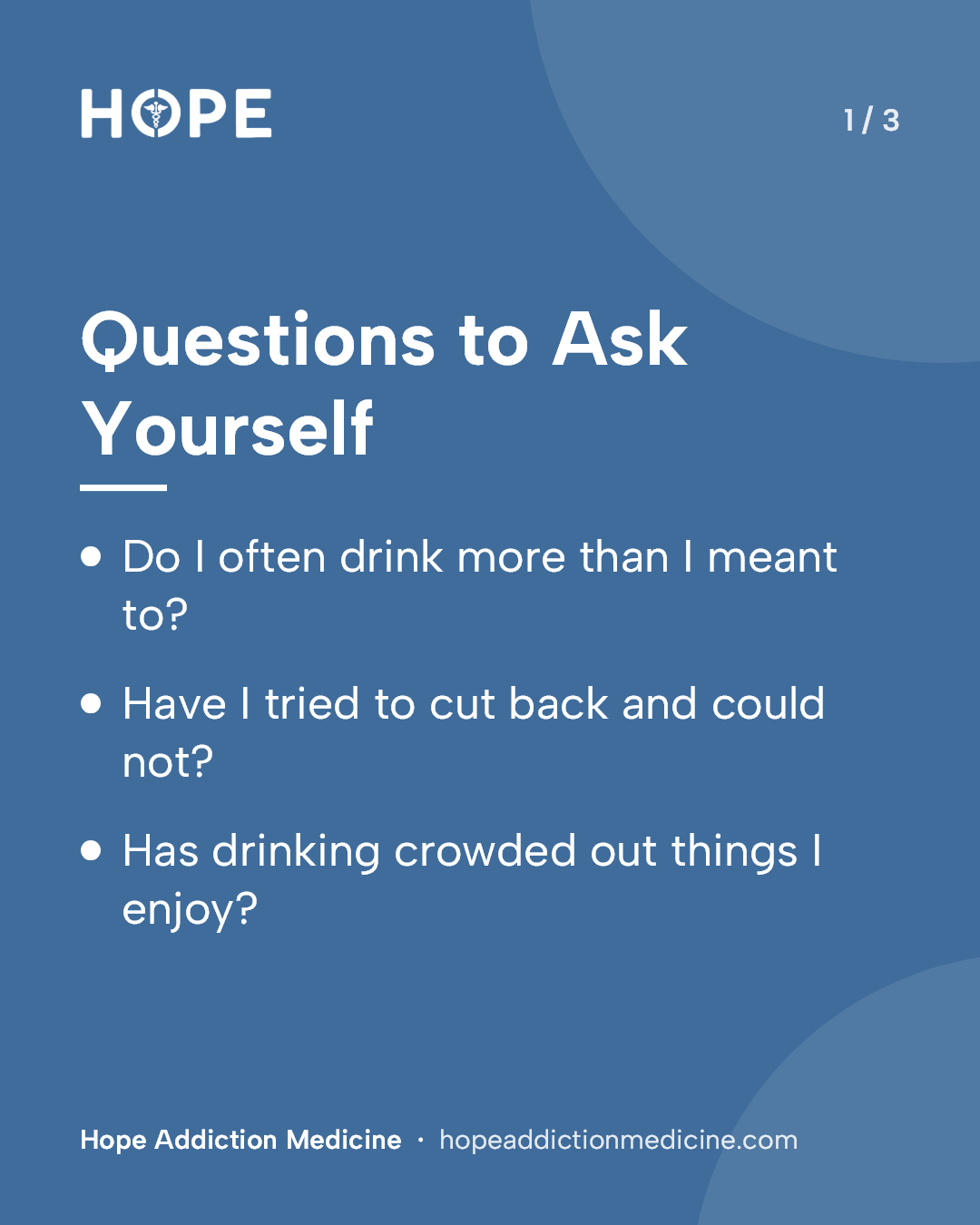
- Ending up drinking more, or for longer, than you planned
- Wanting or trying to cut down and not managing it
- Losing a lot of time to drinking or to recovering from it
- Urges to drink so strong it is hard to think of anything else
- Drinking getting in the way of home, family, work or school
- Keeping on drinking despite trouble with family or friends
- Dropping activities you used to care about so you can drink
- Ending up in risky situations, such as driving, during or after drinking
- Keeping on drinking despite low mood, anxiety or a health problem it makes worse
- Needing much more alcohol to get the same effect
- Withdrawal as alcohol wears off, such as trouble sleeping, shakiness, nausea or sweating
Following DSM-5-TR, NIAAA rates two or three of these as mild, four or five as moderate, and six or more as severe. Only a clinician who knows your history can make the diagnosis.
Ready to Start Treatment?
Confidential, evidence-based care in West Ashley. Call to ask about the next available new-patient appointment.
5 cards. Swipe or tap to see the next one.
What to do with your answers
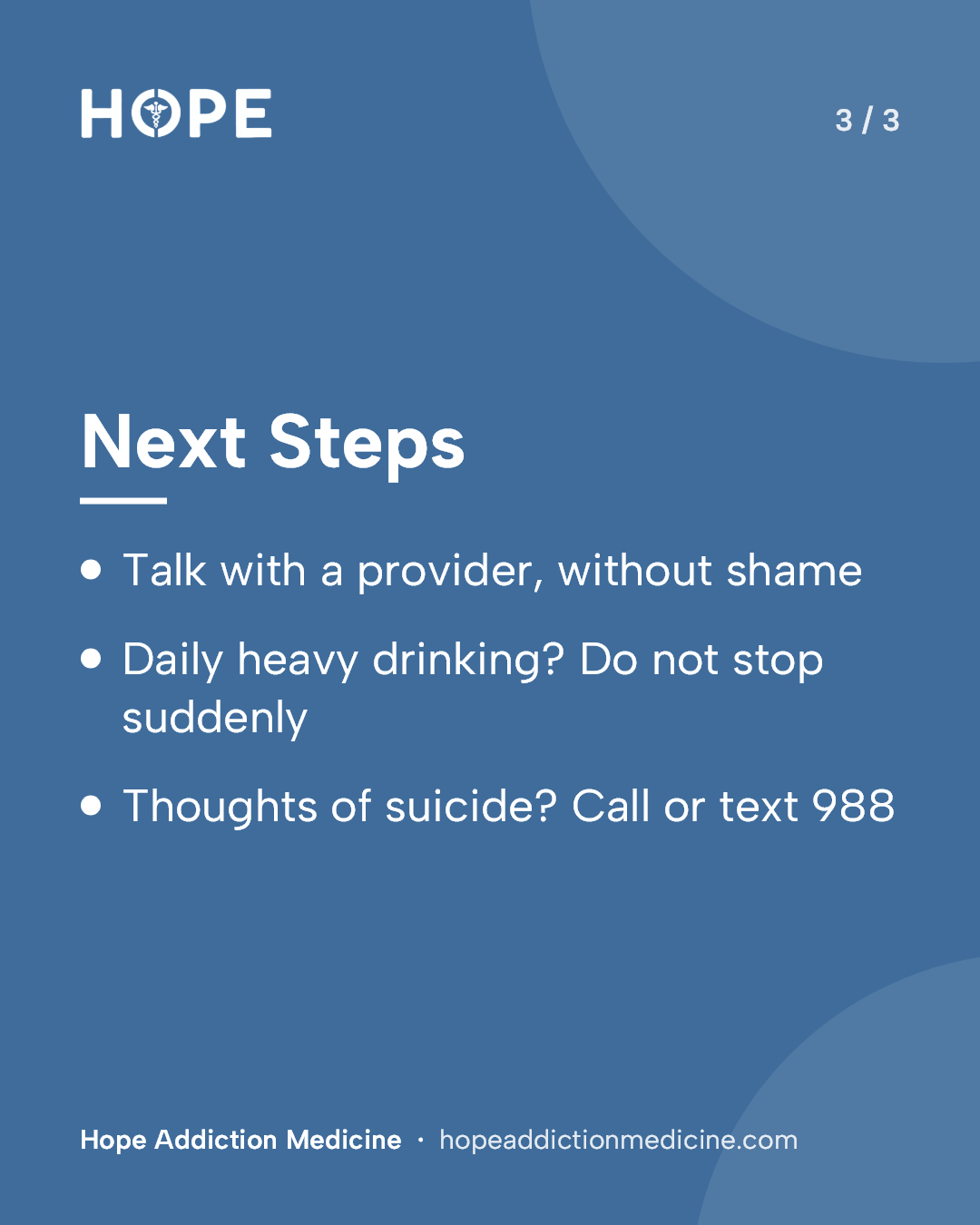
If several of these sound familiar, that is a reason to talk with a provider, not a reason for shame. NIAAA says three medicines are approved by the FDA to help people stop or reduce drinking and prevent a return to drinking, that they are not addictive, and that they can be used alone or with counseling or mutual-support groups. NIAAA also notes that many people with alcohol use disorder recover, and that setbacks along the way are common.
People often search for specific approaches, such as cognitive behavioral therapy (CBT), motivational interviewing or mutual-support groups. Ask us about any of them. We will tell you what we can help with here and offer a referral to a dedicated program or specialist when that is a better fit.
If you drink heavily every day, do not stop suddenly before talking with a medical provider. Alcohol withdrawal can cause seizures and delirium tremens, which can be fatal. Call 911 for a seizure, confusion, hallucinations, or fever with shaking and a racing heart.
If you are having thoughts of suicide, call or text 988. Learn more about alcohol use disorder treatment in West Ashley, or read how naltrexone for alcohol is started and taken.
Sources: NIAAA, Understanding Alcohol Use Disorder; NIAAA Core Resource on Alcohol, Screen and Assess; NIAAA Core Resource on Alcohol, Defining How Much Alcohol Is Too Much; American Psychiatric Association, Diagnostic and Statistical Manual of Mental Disorders, Fifth Edition, Text Revision (DSM-5-TR).
Help at Hope Addiction Medicine
Our team combines medication with counseling and behavioral therapies, through hybrid in-person and virtual care from our West Ashley office in Charleston, with urine drug screens at a local lab and periodic vitals checks close to home. Call to ask about the next available new-patient appointment. Request an appointment or call our office.
This article is general information, not medical advice, and does not create a patient–provider relationship. Every situation is different, so see a provider who can evaluate yours and develop a plan of care. Any medication discussed here may not be right for you: the right choice depends on your diagnoses, other health conditions and current medicines, so take medication only as directed by the provider managing your care. If you are ever in doubt about an emergency, call 911 or go to the nearest emergency room. If someone may be overdosing, call 911 and give naloxone if you have it.
Frequently Asked Questions
Clinicians use the diagnosis alcohol use disorder, based on symptoms over the past year rather than on how often you drink alone. Daily drinking can still add up to heavy drinking by NIAAA's definition, so it is worth talking with a provider.
A three-question alcohol screen drawn from the 10-question AUDIT. It asks how often you drink, how many drinks you have on a typical drinking day, and how often you have 6 or more on one occasion.
NIAAA defines heavy drinking for women as 4 or more drinks on any day or 8 or more a week, and for men as 5 or more on any day or 15 or more a week.
A screening quiz can tell you whether to look more closely, but it cannot diagnose. A qualified clinician makes the diagnosis using the DSM-5-TR criteria.