
Naltrexone is one of three medicines approved by the FDA for alcohol use disorder, according to NIAAA. It blocks part of the reward that alcohol brings, which can make cravings and heavy drinking days easier to manage. If your provider has suggested it, here is what starting it and taking it day to day involve. For how it compares with acamprosate, read naltrexone vs acamprosate.
Before the first dose
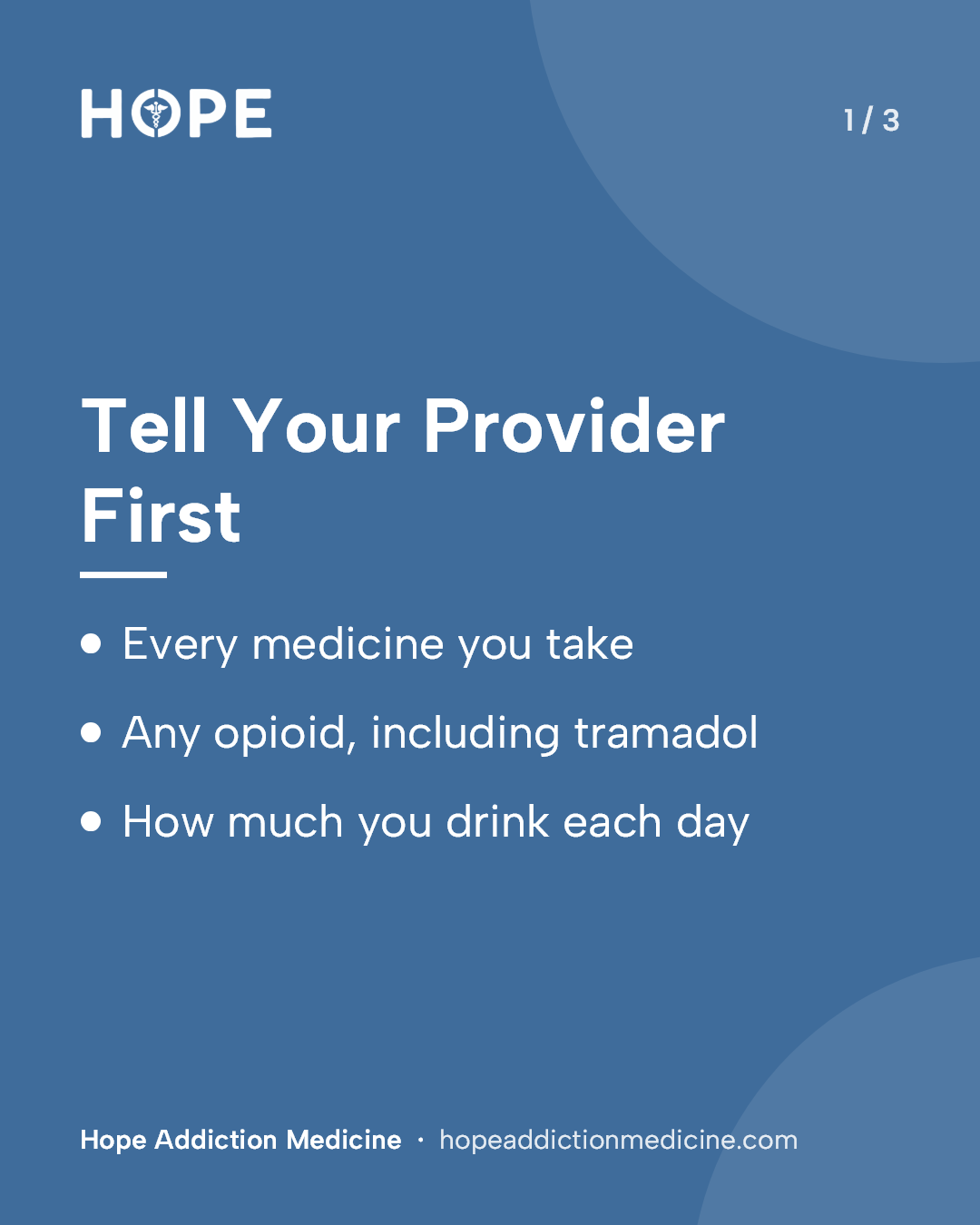
Your provider asks about every medicine you take, because opioids and naltrexone do not mix. Naltrexone, including the monthly Vivitrol shot, can be started only after an opioid-free window: at least 7 to 10 days after short-acting opioids, and often 14 days or longer after methadone or buprenorphine. The label names tramadol among the opioids that must be out of your system first. Naltrexone cannot be taken with any opioid, including opioid pain medicines, buprenorphine or methadone; it causes sudden withdrawal and blocks opioid pain relief in an emergency.
Your provider also checks your liver, because the label warns that naltrexone may cause liver injury.
Taking it
For alcohol use disorder, the label recommends 50 mg once a day for most patients, and your provider sets your dose. Naltrexone also comes as Vivitrol, a monthly injection given in our office, for people who would rather not take a daily pill.
The label says naltrexone does not lead to physical or psychological dependence. It also does not cause the sudden sick reaction to alcohol that disulfiram (Antabuse) does. It works on cravings and reward instead.
Side effects
In the label's alcohol studies, the most common side effects were nausea, headache, dizziness, nervousness, tiredness, trouble sleeping, vomiting, anxiety and sleepiness. Tell your provider about any that bother you.
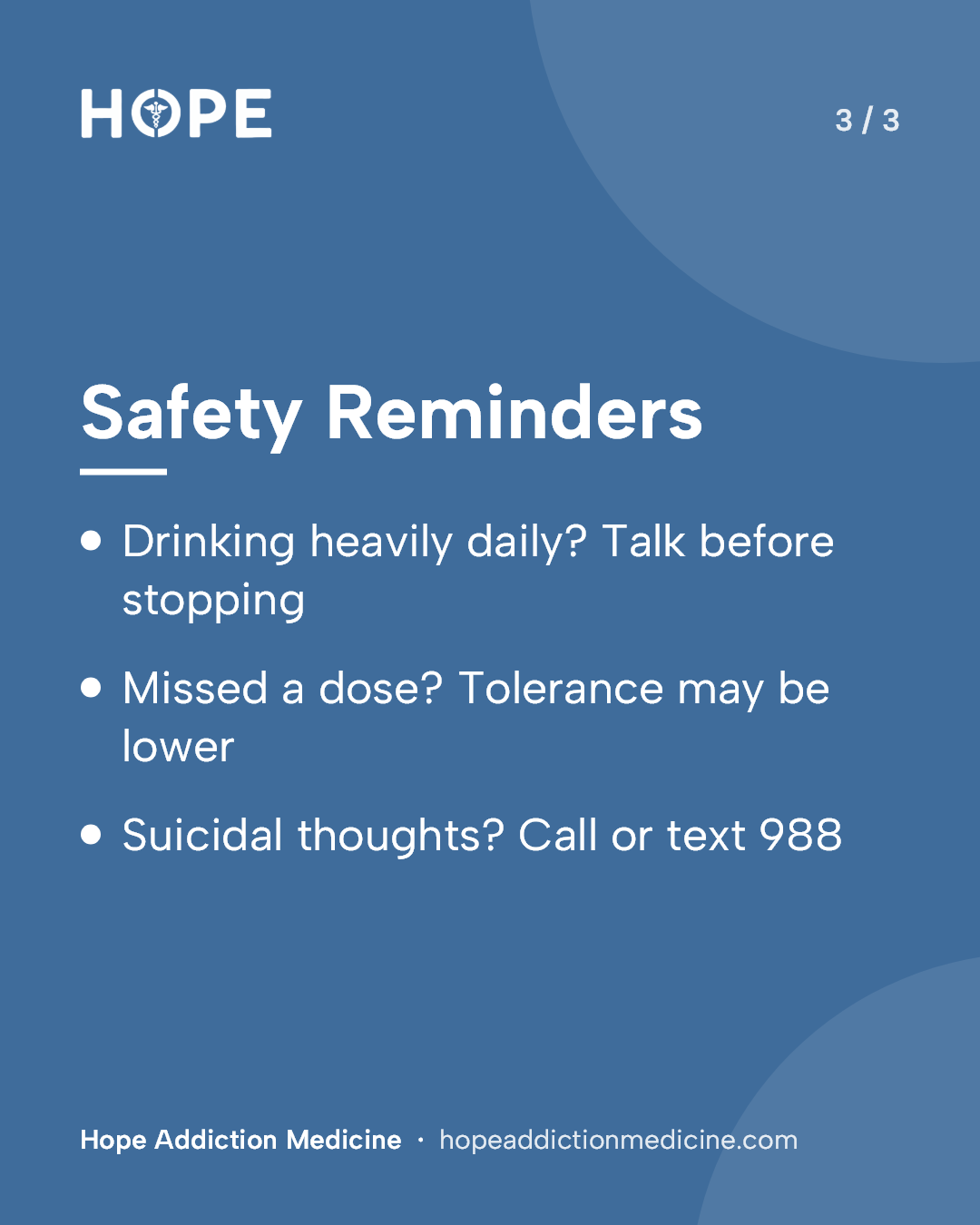
Call your provider right away if you notice signs of liver trouble, such as yellowing of your skin or the whites of your eyes, dark urine or pain in the upper right part of your belly. The label also asks patients and families to watch for depression or thoughts of suicide. If you have thoughts of suicide, call or text 988.
Carry a card
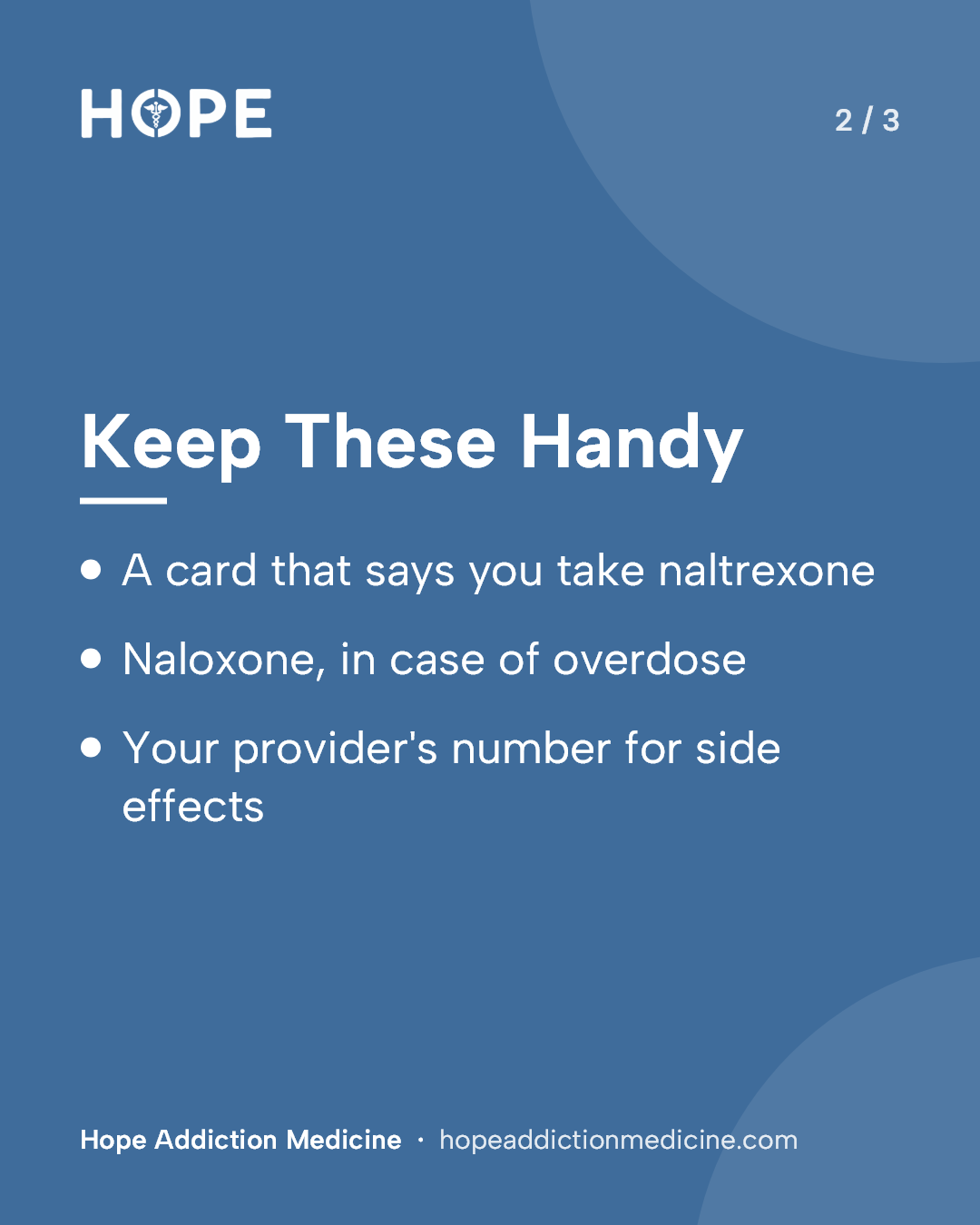
The label advises carrying identification that tells medical staff you take naltrexone. In an emergency, opioid pain medicine may not work the way it usually does, so the care team needs to know. A wallet card or a note on your phone's emergency screen both work.
Ready to Start Treatment?
Confidential, evidence-based care in West Ashley. Call to ask about the next available new-patient appointment.
5 cards. Swipe or tap to see the next one.
The overdose risk after stopping
After detox, as a Vivitrol dose wears off, or if you miss a dose, your tolerance is lower than before. Using the amount you used before can cause a fatal overdose. Keep naloxone on hand. The label adds that trying to overcome the block with large amounts of opioids can lead to life-threatening opioid intoxication or a fatal overdose.
Medicine plus support
NIAAA says the approved medicines can be used alone or with counseling or mutual-support groups. Your goals, whether stopping or cutting back, are part of the plan you make with your provider. Approaches people ask about include cognitive behavioral therapy (CBT), motivational interviewing and mutual-support groups. Bring your questions about any of them to your visit, and we will say plainly what we can provide and when a referral to a dedicated program makes more sense.
If you drink heavily every day, do not stop suddenly before talking with a medical provider. Alcohol withdrawal can cause seizures and delirium tremens, which can be fatal. Call 911 for a seizure, confusion, hallucinations, or fever with shaking and a racing heart.
Learn more about alcohol treatment in Charleston and the Vivitrol injection.
Sources: DailyMed, Naltrexone Hydrochloride Tablets USP, prescribing information; NIAAA, Understanding Alcohol Use Disorder.
Help at Hope Addiction Medicine
Our team combines medication with counseling and behavioral therapies, through hybrid in-person and virtual care from our West Ashley office in Charleston, with urine drug screens at a local lab and periodic vitals checks close to home. Call to ask about the next available new-patient appointment. Request an appointment or call our office.
This article is general information, not medical advice, and does not create a patient–provider relationship. Every situation is different, so see a provider who can evaluate yours and develop a plan of care. Any medication discussed here may not be right for you: the right choice depends on your diagnoses, other health conditions and current medicines, so take medication only as directed by the provider managing your care. If you are ever in doubt about an emergency, call 911 or go to the nearest emergency room. If someone may be overdosing, call 911 and give naloxone if you have it.
Frequently Asked Questions
Naltrexone does not cause the sudden sick reaction to alcohol that disulfiram does, and some people start it while still drinking with a goal of cutting back. Follow the plan you make with your provider, and if you drink heavily every day, do not stop suddenly without medical advice.
No. The label says naltrexone does not lead to physical or psychological dependence, and NIAAA describes the approved alcohol medicines as not addictive.
Usually at least 7 to 10 days after short-acting opioids, and often 14 days or longer after methadone or buprenorphine. Starting sooner can cause sudden withdrawal.
No. Naltrexone cannot be taken with any opioid, including buprenorphine; it causes sudden withdrawal and blocks opioid pain relief in an emergency.